
Your organization can claim a reduction in its scope 2 emissions.

Learn more about EACs
Energy Attribute Certificates
Advance your renewable energy progress with high-quality EAC procurement tailored to your business's needs
What are EACs?
An energy attribute certificate, or EAC, is official documentation that proves that one megawatt-hour (MWh) of renewable energy has been added to the energy grid. Purchasing an EAC entitles the buyer to make the only claim on consumption of that renewable energy and its associated environmental benefits.
Companies that are committed to reducing their scope 2 footprint will procure high-quality, verified global EACs as a critical component of their climate strategy. They use these instruments to report scope 2 reductions against their RE100, Science Based Target Initiative (SBTi), or CDP targets.
Take decisive action to reduce your environmental footprint by supporting renewable energy and high-impact carbon projects.
EACs from around the globe
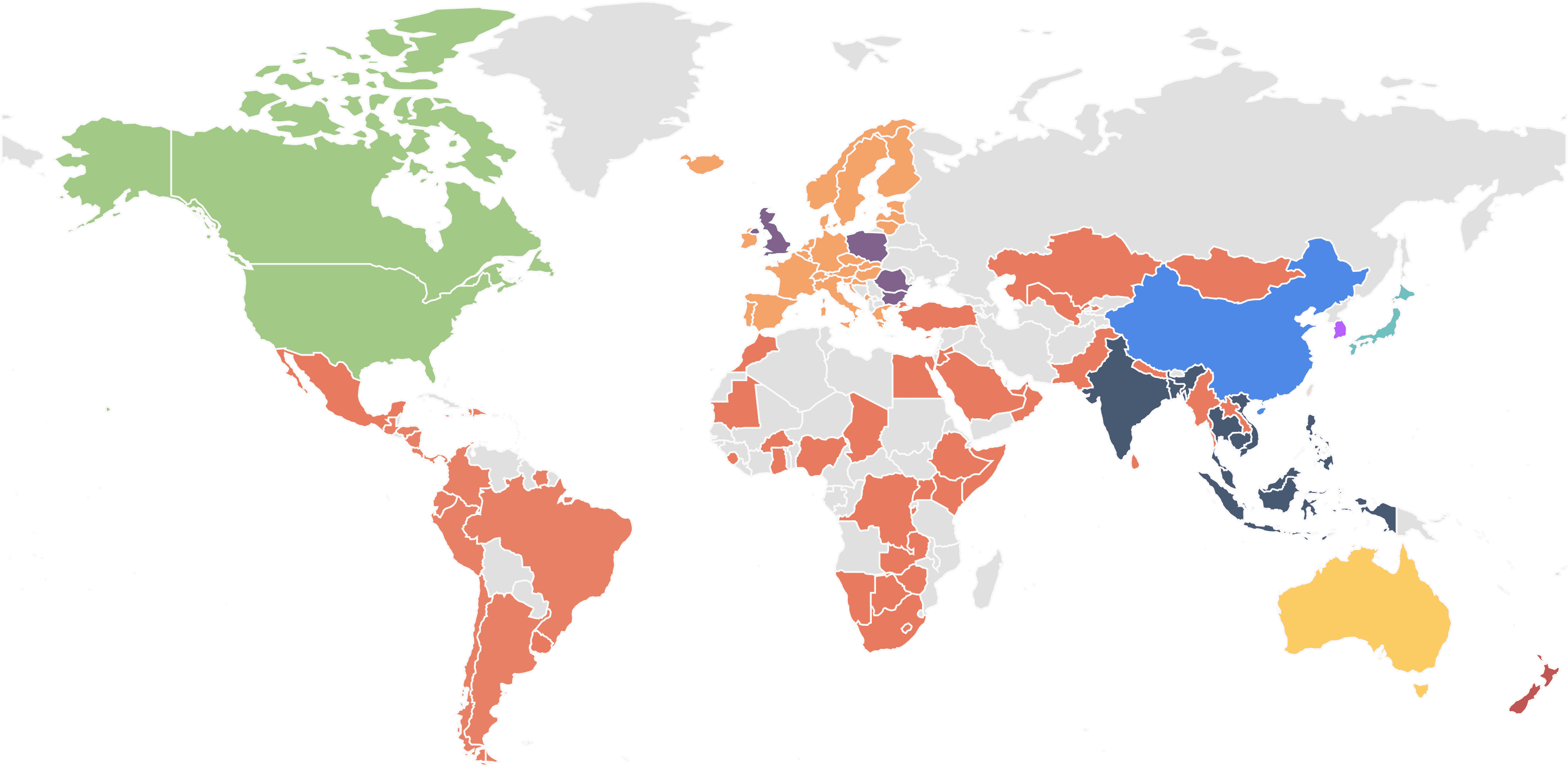
Renewable energy markets use different EAC instruments across regions. The map below highlights common market patterns and shows how 3Degrees supports worldwide EAC procurement with high-quality, third-party verified products sourced across more than 100 countries.
RECs / PPAs
I-RECs
AIB GOs / PPAs
Non-AIB GOs / REGO / PPAs
GECs
TIGRs / I-RECs
Korea RE100 Certificates
J-Credits / I-RECs / NFCs
LGCs
I-RECs / NZECs
- RECs / PPAs: Canada, United States
- I-RECs: United Arab Emirates, Argentina, Bangladesh, Brazil, Chile, Colombia, Costa Rica, Dominican Republic, Egypt, Guatemala, Honduras, Israel, Morocco, Mauritius, Mexico, Nigeria, Panama, Peru, Pakistan, El Salvador, Türkiye, Uganda, South Africa
- AIB GOs / PPAs: Austria, Belgium, Switzerland, Cyprus, Czechia, Germany, Denmark, Estonia, Spain, Finland, France, Greece, Croatia, Hungary, Ireland, Iceland, Italy, Lithuania, Luxembourg, Latvia, Netherlands, Norway, Portugal, Serbia, Sweden, Slovenia, Slovakia
- Non-AIB GOs / REGO / PPAs: United Kingdom
- GECs: China
- TIGRs / I-RECs: Indonesia, India, Cambodia, Sri Lanka, Malaysia, Philippines, Singapore, Thailand, Vietnam
- Korea RE100 Certificates: South Korea
- J-Credits / I-RECs / NFCs: Japan
- LGCs: Australia
- I-RECs / NZECs: New Zealand
Benefits of purchasing EACs
EACs help organizations make credible renewable electricity claims now, while supporting broader decarbonization and supplier engagement strategies.
EACs are an important tool for immediate emissions mitigation.
EACs are accepted emission reduction tools to advance progress toward net zero, SBTi, and RE100 targets.
EACs can be part of a scope 3 reduction strategy when purchased by or on behalf of suppliers to address their scope 3 footprints.
Frequently asked
Energy Attribute Certificate FAQs
Quick answers on REC and EAC types, certification, claims, and how to purchase across markets.
EAC basics
A renewable energy certificate (REC) is a market-based instrument issued when a renewable energy source produces one megawatt-hour (MWh) of electricity and delivers it to the grid in North America. As a type of energy attribute certificate (EAC), a REC documents that generation and allows the buyer to claim consumption of that energy and its benefits. It is typically traded separately from the underlying electricity.
To qualify as an EAC, the renewable energy must be generated by wind, solar, biomass, geothermal, or certain hydropower sources.
There are new categories of EACs that have been developed to signify the environmental, social, and other non-power attributes associated with renewable energy generation, like Peace RECs or P-RECs. P-RECs support emerging renewable energy projects in poorly electrified, climate-vulnerable countries where renewable energy investment remains limited. A P-REC is an international renewable energy certification (I-REC) with a supplementary label from Energy Peace Partners that certifies the project’s co-benefits. Each P-REC still represents 1 MWh of renewable energy generated.
RECs cover North America, but other markets use their own certificate systems.
In Europe, guarantees of origin (GOs or GoOs) are the closest equivalent. Over 25 countries trade them through Association of Issuing Bodies (AIB) markets under the European Energy Certificate System (EECS). A renewable energy guarantee of origin (REGO) is the renewable-specific form used in some markets.
In many international markets, buyers use I-RECs. In parts of Asia and Central America, TIGRs may also be available. Australia uses large-scale generation credits (LGCs).
Japan uses J-Credits and Feed-in-Tariff non-fossil value certificates (FIT NFCs). New Zealand uses the New Zealand Energy Certificate System (NZECS).
There is no difference. The terms are interchangeable, so renewable energy certificates are also referred to as renewable energy credits.
EAC products vary by country, region, and state, and each renewable energy market has its own qualification requirements. EACs can be created from almost all renewable generation, but the EAC’s value is determined by its eligibility for specific markets depending on technology, location, generation period, and other factors.
To avoid disputes over environmental benefit claims and to allow ownership to be transferred, RECs are typically tracked in electronic tracking systems. These databases assign a unique serial number to each REC based on generation data provided by the renewable facility. Tracking systems typically record the renewable facility location and owner, technology and fuel type, commercial online date, and the month and year the associated MWh was generated. As tracking systems are a requirement of many state RPS programs, it is beneficial for renewable generators to register their facilities. 3Degrees works with a variety of tracking systems and can accommodate facilities across the U.S.
Certification and claims
In order to register an EAC, the renewable energy operator has to apply to the EAC Register. Once that’s approved, they’ll receive an EAC for every MWh that is produced. The EAC Authority then goes through a verification process, prior to adding the EAC to the registry and issuing a certificate.
After an EAC is registered, the EACs have a maximum life cycle that varies for different certificates and markets. The EAC can be transferred or purchased by a buyer, and it can be canceled, expired, or withdrawn and deleted from the registry. Any of these actions will effectively retire the EAC as it can no longer be sold from the registry.
EACs make it possible for entities to make reliable claims about their energy usage by tracking and assigning ownership to renewable electricity generation. Because electricity is not tangible and tracing specific electrons through the grid is not possible, EACs serve as the accounting instrument that certifies how, where, and when a MWh of electricity was produced. Standards bodies like the Center for Resource Solutions define baseline criteria for renewable energy generation, which adds value to RECs that qualify for certification.
There are additional labels that can inform purchasers about the quality of the EACs, beyond what is legally required in verification compliance. An assortment of labels exist across global markets, including third-party audits, verified social impacts, and verifiable environmental protection criteria.
Examples of third-party standards that independently audit EACs are Green-e® and EKOenergy. These labels verify the chain of custody for EACs to ensure that only one customer claims credit for the renewable energy and environmental attributes created. Green-e® is the most widely used voluntary REC certification program in the U.S. that sets buyer protection and environmental standards for REC products. EKOenergy is an internationally recognized, nonprofit eco label for renewable electricity, gas, and heat.
After renewable energy is generated, two products are created—the actual energy that will be added to the grid and the environmental attributes of that energy. These are often sold separately. If someone is claiming use of the renewable energy, then they must have contractual proof that they own the renewable energy attributes associated with the generation, which takes the form of a REC or an EAC. The owner of that REC or EAC can then make a claim on the renewable energy.
The claims that you can make will vary based on your renewable energy purchase, but the seller that you work with can help guide your marketing claims.
Some common renewable energy claims are:
- By installing solar panels we have reduced our carbon footprint.
- Our product is manufactured using 100% renewable energy.
- In order to achieve our renewable energy goals, we purchase energy attribute certificates from Wind Farm X.
For a full overview of the Dos and Don’ts of Marketing Your Renewable Energy Purchase, review our whitepaper.
Disclosure, as it relates to renewable energy, is public reporting of consumed electricity that is verified by an EAC. In the REC market, you can voluntarily disclose by reporting your electricity usage to various standards like CDP, RE100, and others. Or you may be required to release this information through a compliance disclosure.
In Europe, there is typically a requirement of a compliance disclosure so that consumers can review the seller’s electricity usage.
The primary deadline for most countries is March X + 1 of production year X, however, some countries have different deadlines. For instance, the deadline in the UK is June X + 1 of a production period from April X to March X + 1, while Germany is October X + 1 of production year X.
Markets and rules
In a voluntary market, there is no requirement to purchase renewable energy, and typically organizations, businesses, and utilities purchase these in order to reduce their footprint and make environmental claims.
In a compliance market, government regulators set targets, or Renewable Portfolio Standards (RPS). This means that the RECs have to be purchased and reported on in compliance markets in order to meet those targets.
The AIB is the Association of Issuing Bodies, which is a European organization that uses and promotes a standardized system of energy certification, used for issuing, trading, and canceling GOs, called the European Energy Certificate System (EECS). At the end of 2021, the AIB had members from 27 European countries with an aim to unite all European energy attribute tracking systems.
Trading of GOs can easily occur between AIB countries without the risk of double claims or counting. While trading can occur between non-AIB countries, it’s not advised, as you don’t have the same assurances you would when trading with an AIB country. The AIB continues to add new countries to its registry each year.
Corporations and individuals will have different motivations for purchasing RECs and global EACs, and there are many factors that should be considered when making a purchase. Some of these are location, technology, environmental attributes, and co-benefits.
Location asks how close the renewable energy project is to where the electricity is originally generated. Technology looks at what renewable resources are producing the environmental attributes. Environmental attributes consider whether there are avoided emissions benefits along with the renewable energy itself. Co-benefits assess whether the project provides value beyond the environmental attributes, such as job creation.
Then there are other considerations that have more to do with regulatory and reporting value, like what registration system is used to track ownership and avoid double counting; regulatory interaction of the environment where the renewable energy is being purchased; reporting value and whether platforms and certifications require certain EAC criteria to be met; and if the EACs meet the criteria for the U.N. Sustainable Development Goals (SDGs).
Buying and selling
Entities can buy directly from energy producers, traders, brokerage platforms, or national auctions.
Renewable energy producers, project developers, licensed wholesale retailers like 3Degrees, or anyone with rights to the EACs from a renewable asset (sometimes small business owners or even individual residences) are able to sell environmental commodities like RECs and other EACs.
When a REC is sold together with the underlying energy, it is called a bundled REC. Unbundled RECs are sold separately from the underlying energy, so the power is not being directly consumed by the purchaser.

Ready to make an impact?
Explore our catalog of high-quality renewable energy projects or speak with one of our expert advisors.