
According to the World Economic Forum report, the following hard-to-abate sectors: steel, cement, aluminum, primary chemicals, oil & gas, aviation, shipping, and trucking are responsible for 40% of global direct CO₂e emissions. As stated by the U.S. Department of Energy, emissions from these sectors have significant scope 1 footprints, primarily driven by the combustion of natural gas or petroleum products in onsite equipment and processes. Compounding the issue, the International Energy Agency’s 2025 Global Energy Review highlighted that natural gas emissions were the largest single contributor to global carbon emissions growth in 2024.
With natural gas combustion emissions increasing, standards bodies and regulations are focusing on these emission sources with updated guidance. A few examples:
- Once finalized, the updated Science Based Targets Initiative (SBTi) Corporate Net Zero Standard will require companies to set independent scope 1 and scope 2 emission reduction targets for the first time, increasing scrutiny on direct combustion emissions.
- In the European Union, policies like the Carbon Border Adjustment Mechanism (CBAM) impose a carbon price on goods equivalent to their embedded emissions, incentivizing manufacturers to source raw materials produced with lower emissions. In parallel, the EU Emissions Trading System (EU ETS) imposes a carbon price on direct emissions from the combustion of fuel or natural gas, encouraging participants to switch to renewable alternatives.
- Both the Greenhouse Gas Protocol (GHGP) and SBTi are in the process of evaluating how market-based mechanisms, such as renewable thermal certificates (RTCs) and biomethane guarantees of origin (GoOs), can be applied in scope 1 emission accounting and target setting.
With the focus on scope 1, what steps can an organization take to reduce its emission footprints from natural gas combustion?
Defining your operational boundary
Determining your operational boundary is a crucial step that will define the emission reduction levers and instruments available to your organization. While smaller onsite steam-generating units likely fall within your scope 1 emission boundary, large electricity-generating units, such as combined heat and power (CHP) plants, can fall within either scope 1 or scope 2, depending on ownership and control. To aid in making a scope 1 or scope 2 determination, ask yourself the following three questions using a CHP as an example:
- Do we have operational control over the CHP?
- Is the CHP on-site and within the property boundaries of our facility?
- Is the CHP connected to our facility by a direct line?
If the answer to all three is “yes”, the CHP is likely a scope 1 emissions source. If not, it may be a scope 2 source, particularly when electricity is supplied via a third party over the grid. Accurate boundary setting helps ensure that emission reductions are correctly accounted for in greenhouse gas (GHG) inventories and climate targets.
Strategies for reducing emissions from natural gas combustion
There are a number of technologies and strategies currently available to reduce natural gas combustion emissions. This includes everything from replacing equipment with electric heat pumps to switching fuels to renewable natural gas (RNG) or biomethane, or even green hydrogen. Some solutions involve substantial upfront capital, years of planning, or even reconfiguration of your facility or manufacturing process. At times, a solution may even require all three. In hard to abate sectors, it is often difficult to rework a manufacturing process, so for organizations seeking immediate or less disruptive solutions, RNG offers a low CAPEX option.
RNG, also called biomethane, is a renewable fuel that is produced from various organic feedstocks such as waste or crops, and is a drop-in replacement chemically identical to conventional natural gas, but without the fossil emissions. Biomethane generally requires low upfront investment and can serve as a bridge fuel while companies work toward electrification or longer-term equipment upgrades. Procuring and accounting for RNG functions similarly to renewable electricity, where an environmental attribute certificate (EAC), such as an RTC, biomethane certificate, or UK renewable gas guarantee of origin (RGGO), is issued alongside the production of the biomethane. These attributes then allow organizations to make claims to the use of renewable gas.
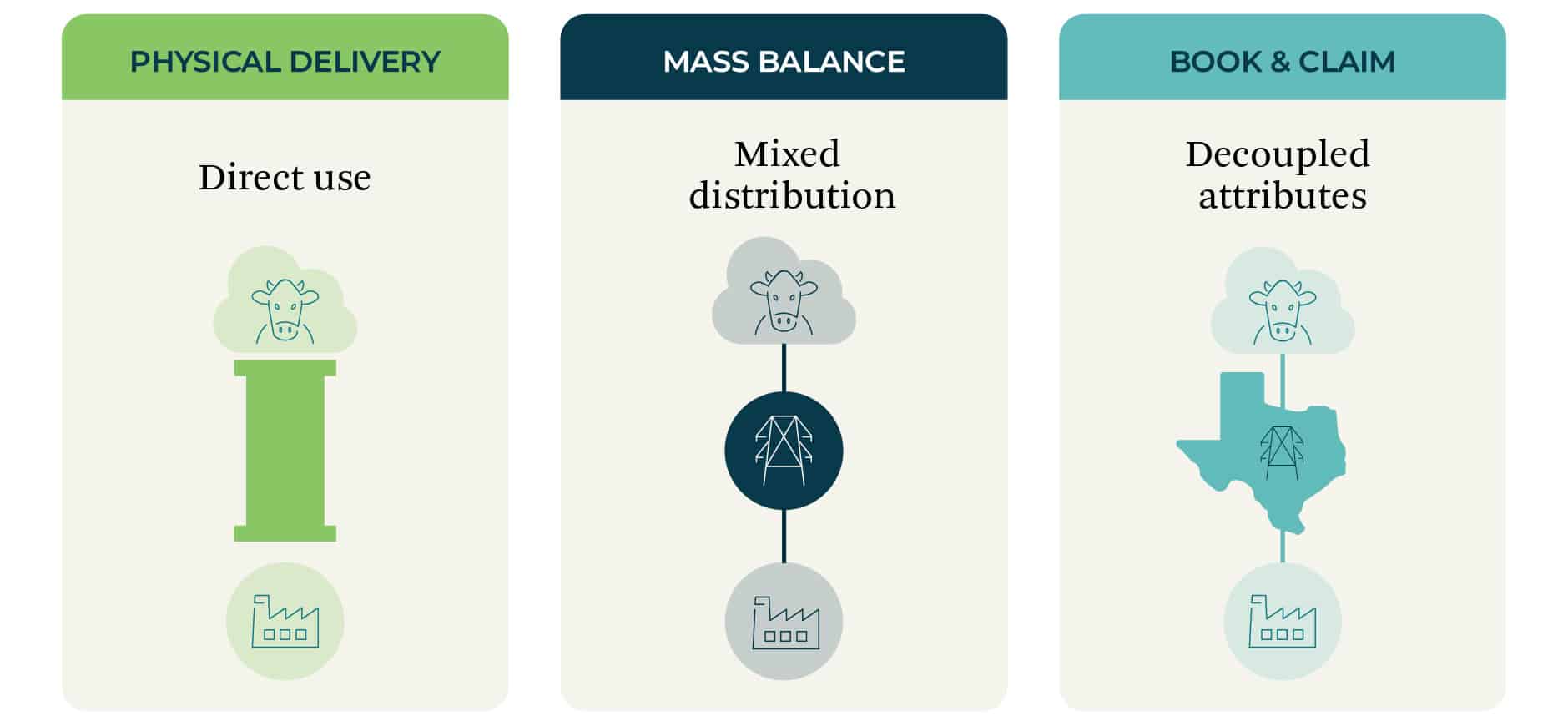
There are three common transaction structures to procure RNG/biomethane:
- Book-and-claim: certificates (RTCs/GoOs) are decoupled from your gas and purchased separately
- Mass balance: a buyer purchases biomethane and EACs from a specific project and the biomethane is mixed into your market’s natural gas distribution grid.
- Physical delivery: you receive direct delivery, via a private pipeline or bioLNG (i.e. liquified biomethane produced from organic waste flows that is cooled for easier transport and storage), and therefore direct combustion of biomethane at your facility. This may require an adaptation to your manufacturing equipment.
Accounting and reporting considerations
Accounting for emissions from RNG in your reporting and target setting is complex and may differ based on the chosen transaction structure. The GHG Protocol currently recognizes physical separation (delivery) as a valid method for procuring and, therefore, accounting for biomethane combustion emissions. It does not, however, provide definitive guidance on the applicability of market-based mechanisms such as certificates procured through a mass balance or book-and-claim transaction, and advises companies to consult their auditors on how to report these purchases in their inventories.
All that being said, the GHG Protocol is currently undergoing revisions to guidance on the accounting of market based mechanisms in scope 1, but that final guidance is not expected until 2028. In parallel, SBTi’s Corporate Net Zero Standard V2.0 draft, published in November 2025, does not yet clarify whether scope 1 market instruments are acceptable in SBTi target setting. The GHG Protocol has indicated a willingness to support “low-carbon contractual investments across sectors”, including biomethane certificates, and advisory groups such as 3Degrees anticipate that market-based mechanisms will eventually be recognized, allowing companies to claim environmental attributes associated with RNG in their scope 1 inventories.
Organizations in the US should take all of this into consideration when determining a procurement method and plan accordingly in their inventories. Conversely, in Europe, the EU commission already has definitive guidance and policies supporting the use of biomethane via book-and-claim or mass-balance transactions.
This is where drawing the line between scope 1 and scope 2 emissions becomes important, because when you start to consider the use of market-based mechanisms, solutions diverge. If an emission source is within scope 1, you can reduce emissions through the procurement of RTCs, but not RECs. If an emissions source is within scope 2, you can reduce emissions through the procurement of RECs, but not RTCs.
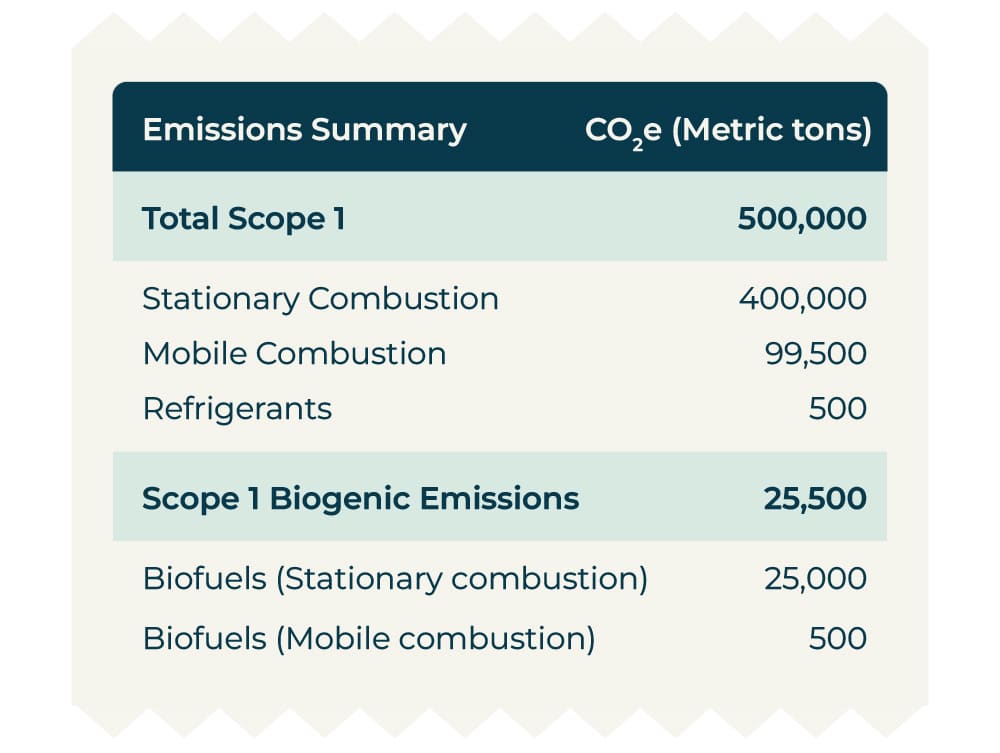
In order to calculate emissions from biomethane, calculate combustion emissions similarly to how you would for conventional natural gas by multiplying fuel usage by the appropriate RNG emission factor. The difference comes when a company combusts biomethane in its own operations, the direct CO₂ emissions are considered “biogenic” and must be reported separately as its own line item rather than grouped with fossil fuel emissions. Other combustion emissions from RNG (like methane) are still reported as normal within scope 1.
Lastly, companies may also identify the amount of biogenic CO2 that was removed during the growth of the biomethane feedstock, and report those removals again as a distinct line item in their inventory. Across all of this, transparent reporting is critical, especially while the GHG Protocol guidance is under development. Some organizations are operating dual ledgers where they disclose detailed information about RTCs/biomethane GoOs to ensure clarity in GHG reporting and maintain credibility in their climate commitments.
Emissions reduction support
Organizations seeking to take meaningful action on their natural gas emissions have a range of innovative solutions at their disposal. As standards evolve and the pressure to decarbonize intensifies, now is the time for corporate climate leaders to advance their scope 1 strategies. 3Degrees stands ready to guide companies through every stage of their emissions reduction journey.
By leveraging a proven portfolio of renewable gas supply projects and comprehensive advisory expertise, 3Degrees helps organizations build and execute tailored biomethane procurement strategies that consider bottom-line costs and risk mitigation levers. For expert advisory support on natural gas emissions reduction, please reach out today.