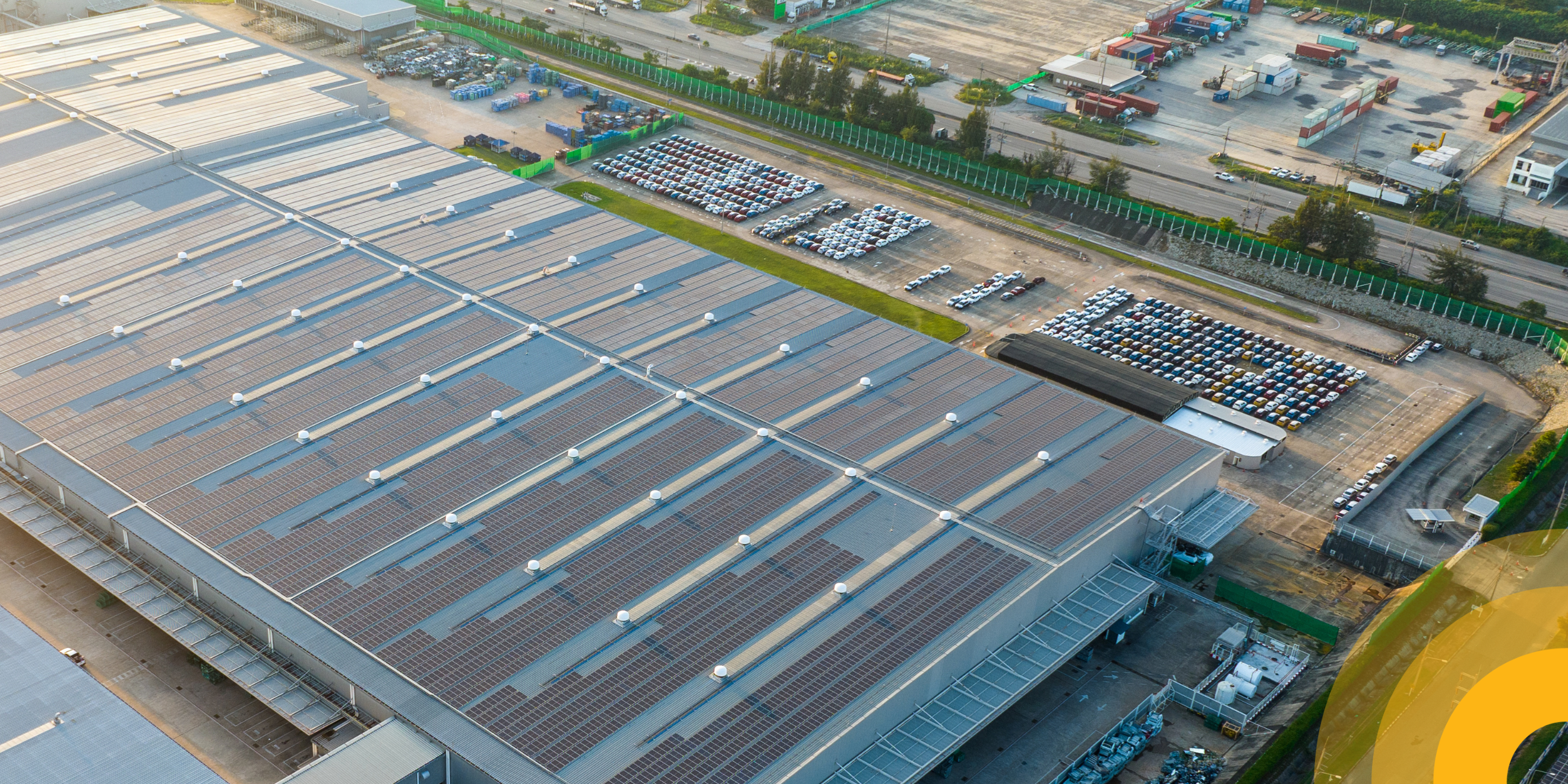
The unforgiving reality of speed to power has meant a generation of new natural gas plants is coming online to address near-term power needs. This buildout is happening amid siting, interconnection, permitting, and deployment constraints facing decarbonized generation, electricity storage, and grid services today. But this doesn’t mean we need to accept the greenhouse gas consequences of those decisions.
As we shift from this market’s storming phase towards shared norms, a vanguard of data center providers, hyperscalers, and software companies are working hard alongside governments to internalize the externalities of their growth. Though industry action remains highly uneven, I have been encouraged by the examples of forward-thinking protections for power consumers, as well as water, noise, heat, local air quality, and waste mitigation that I’ve seen recently.
The AI Decarbonization Imperative
Rather than resigning ourselves to the climate impacts of AI as the unavoidable cost of progress, embracing AI should also mean internalizing climate externalities. In fact, the industry’s current response to the community, fenceline, and power inflation flashpoint issues of data center critics is strong evidence that internalizing CO₂e is achievable.
Microsoft’s data centers in Finland will begin supplying waste heat next year, covering about 40% of district heating for 250,000 users.1 Meta’s newest designs use no operational water for cooling, and the company funds watershed restoration toward a 2030 goal of returning more water than it consumes.2 Acoustic engineering through sound walls, predictive sound curtains and other techniques are suppressing sound to strict levels at property lines3; and batteries, solar, and fuel cells are reducing local air pollutants.
The Playbook
Clean power, storage, and increasingly dynamic data centers and grids must remain our paramount priority. Everything below is designed to accelerate them. Where natural gas is unavoidable, what follows shrinks its footprint and addresses what remains.
Advancing Climate-Informed Decision Making
The industry is already improving model efficiency, right-sizing workloads, shifting compute across time and geography, and adopting more efficient hardware. The next step is giving buyers the information to choose. I foresee a market in which institutions and individuals make climate-informed decisions about the models and software they use. Early tools exist: Salesforce’s Agentic Benchmark for CRM already scores models on sustainability alongside accuracy, cost, speed, and trust and safety, though only by proxy, because providers don’t yet disclose energy use.4 Buyers should use these tools now and ask their AI vendors for real emissions data.
Renewable and Carbon-Free Portfolio Standard for Data Centers
Given speed to power is driving acute demand for natural gas generators, and data centers that generate their own power don’t have to comply with renewable portfolio standards (RPS) that apply to utilities, should we pass clean power legislation modeled off RPSs requiring data centers to buy an increasing percentage of their power year over year from carbon-free sources? Carbon-free would include renewables, nuclear, and the CCS-captured share of output of gas plants. As in today’s carbon cap-and-trade and RPS markets, those best positioned to secure carbon-free power can sell surpluses to data centers least well positioned, allowing the sector to meet the target at the lowest cost. Regardless, data centers should anticipate and prepare for regulatory compliance; we are already starting to hear U.S. state policy discussions considering incorporating data centers into state compliance requirements.
Supply
We should always build and contract clean power, storage, and flexible demand wherever it can meet the need in time.
Realistically though, there will still be circumstances where natural gas plants will be needed as a transitional solution. Even in these instances, there are actions we can and should take to mitigate the environmental impact:
- Certified low-leak natural gas supply should supply these plants. Upstream potent methane natural gas system leakage is documented at 2.3%, including both supply and distribution, with significant climate impact because methane has a global warming potential of more than 80x CO₂ emissions over 20 years.5 Peer-reviewed studies find that leakage of just 0.2-3.2% can have the same short-term climate impact as coal generation (Science, Alvarez)6,7. Meanwhile, more than 25% of natural gas production in the U.S. and 7.5% globally is now independently certified for methane performance (ERM, EIA)8. Low-leak certified natural gas supply has leak rates of <0.2% and data centers can readily source it for only 0-2% premiums (S&P Global).9
- Onsite carbon capture and sequestration (CCS) should be paired with combined cycle natural gas generators. CCS systems can add two or more years to data center completion. However, natural gas plants can be built CCS-ready with little impact on timeline, paired with binding commitments to complete capture by a set date once permits for CO₂ storage wells are secured. These commitments can be written into power purchase agreements, regulatory approvals, and air permits with dated milestones and financial backstops and in the form of requiring durable removals for any CO2 emitted before capture is running. Final CCS construction can then occur after the data center is operational.
No data centers run natural gas power with carbon capture today. While data centers often support offsite natural gas purchased through the grid, only roughly ¼ of announced data centers involve onsite natural gas power generation. Of these, ~90% have no plans for CCS, while ~5% plan to capture carbon from the start with another ~6% described as “CCS-ready”.
Meanwhile, CCS increases data center construction cost by only 3.0-5.7% (Global CCS Institute)10. Learning rates suggest capital costs for comparable technologies fall 10-15% with each doubling of deployment (IEA)11. Beyond up-front construction costs, CCS also adds operating costs, which are not only nullified by the U.S. OBBBA’s 45Q credit,12 but pay back current CCS incremental construction costs in less than 10 years. This is a reasonable ask of data centers. Even in the absence of the 45Q credit, the watt-bit spread between the cost of power and the value of compute suggests this is affordable.
Google’s agreement with Broadwing Energy is a strong model. Google agreed to buy most of the output of a 400-megawatt gas plant in Illinois designed from the start to capture about 90% of its CO₂. Power is scheduled for 2029 and capture for 2030.
- Biomethane/renewable natural gas (RNG) and low-carbon hydrogen should be used to address emissions associated with natural gas generation within a shared system (i.e. gas grid) with plants designed to accept them. Both are limited today but new firm long- term demand could trigger additional generation. And where biomethane is bought through market-based instruments rather than physical delivery, it should follow established chain-of-custody protocols, ensure proof of sustainability (if applicable), and be registry-tracked and retired on the buyer’s behalf.
- After the above solutions are implemented, residual emissions must be addressed, and these long-lived natural gas generators require long-term carbon management commitments. Residual emissions will consist of upstream gas leakage, carbon emissions produced before CCS systems are in place or are just not captured by CCS systems, and emissions produced by data centers that elect to not capture and sequester them. These commitments will let companies demonstrate credible, disclosable climate action, earn formal recognition under SBTi, and protect their license to keep building.
Residual Emissions are Tailor-Made for Market-Based Solutions
There is a significant opportunity to consolidate demand and drive markets for carbon sequestration and carbon removal to maturity using market-based instruments. These long-term contracts would create bankable demand signals unlocking low-cost institutional investment. Far from the speed to power pressures faced by data centers, these investments would fund the largest, most efficient projects on earth, whether centralized carbon sequestration plants or distributed programmatic carbon removals.
In addition, durable carbon removals should neutralize residual long-lived fossil CO₂, while short-lived upstream methane leakage should be prevented first at the source with any remaining mitigated by capturing methane from gas systems, landfills, farms, and coal mines.
Meanwhile, dating back to the Green Power Market Development Group in the 2000s,13 decarbonization-oriented buyers’ collaboratives have been effective at expertise sharing, market development, and collective procurement, particularly in hard-to-abate sectors where supply chains need development. In fact, collaboration has been a common thread at climate confabs around the globe this year, ranging from ZET Scale (which with one 2,500 unit order doubled demand for zero-emission trucking in the U.S.)14 to Frontier ($1.8 billion committed to permanent carbon removals, $668 million already contracted)15 and the work of the Global CCS Institute, natural forum for the collaboration discussed here.
Crediting infrastructure now exists to support these commitments
- Under SBTi’s new Corporate Net-Zero Standard V2.0, companies can be recognized for taking responsibility under its Ongoing Emissions Responsibility (OER) framework16, a voluntary program that recognizes companies for their climate contributions for their ongoing emissions. In 2035, large companies will be required to support eligible carbon removals.
- As of September 28, 2026, credits issued under Verra’s carbon capture and storage methodology can qualify for the ICVCM Core Carbon Principles (CCP) label,17 a high integrity bar; and buyers and investors can look to rating agencies to further distinguish quality from these qualifying projects. CCP-labeled credits are also available for methane capture from gas systems, landfills, and coal mines.
- Each ton is claimed once: either as a reduction in the buyer’s own emissions inventory (if it is within the buyer’s value chain) or as a retired credit used to address ongoing, but not in both.
The companies leading the AI revolution are partners in our climate challenge and energy transition. While some will impose moratoria on data centers, the AI revolution is here. The good news is that solutions exist today. By employing the wide array of solutions outlined above, we can deploy AI while addressing its climate impacts. We have the choice. We have the solutions. Let’s bring a generation of carbon sequestration, carbon removal, and other technologies to life.
Endnotes
- https://www.fortum.com/en/media/2026/05/fortum-has-started-heat-production-two-large-data-centre-sites-finland, May 6, 2026.
- https://datacenters.atmeta.com/water/
- Vibration Engineering Consultants, “Engineering Quiet Data Centers: Practical Acoustic Design, Testing, and Modeling for New Builds,” April 2026 (predictive acoustic modeling of property-line levels, barrier and screen walls, enclosures, silencers), https://www.vibeng.com/blogs-and-case-studies/how-to-engineer-quiet-data-centers-acoustic-modeling-and-design/
- https://www.salesforceairesearch.com/crm-benchmark.
- https://www.ipcc.ch/report/ar6/wg1/
- Alvarez, R.A. et al., “Assessment of methane emissions from the U.S. oil and gas supply chain,” Science 361 (2018). https://www.science.org/doi/10.1126/science.aar7204
- Gordon, D. et al. (RMI, Brown, Harvard, NASA JPL, Duke), “Evaluating net life-cycle greenhouse gas emissions intensities from gas and coal at varying methane leakage rates,” Environmental Research Letters (2023). https://iopscience.iop.org/article/10.1088/1748-9326/ace3db; Alvarez, R.A. et al., “Greater focus needed on methane leakage from natural gas infrastructure,” PNAS (2012), https://www.pnas.org/doi/10.1073/pnas.1202407109
- MiQ (certifying 25% of U.S. natural gas production), https://miq.org/miq-statement-on-the-eu-energy-councils-support-of-certification-as-compliance-solution/; IEA, “Prospects for Natural Gas Certification” (7.5% of global production certified in 2024), https://www.iea.org/reports/prospects-for-natural-gas-certification/executive-summary; ERM, “Comparison of Natural Gas Certification Programs,” https://www.erm.com/contentassets/9a34eec3108f406d9da8c1df23ae9628/comparison-of-natural-gas-certification-programs.pdf
- S&P Global Commodity Insights, Platts Methane Intensity Premiums, https://www.spglobal.com/commodityinsights/en/products-services/natural-gas/methane-intensity-premiums; S&P Global Market Intelligence, “Market will develop for gas with very low methane intensity,” Aug. 2023 (certified gas trades at a few cents per MMBtu premium)
- Global CCS Institute, “Role of CCS in US Data Centre Decarbonisation,” 2025, https://www.globalccsinstitute.com/role-of-ccs-in-us-data-centre-decarbonisation/; Global CCS Institute, “Briefing: NGCC with CCS,” May 2026
- IEA Greenhouse Gas R&D Programme (IEAGHG), “Estimating the Future Trends in the Cost of CO2 Capture Technologies,” 2006. https://ieaghg.org/publications/estimating-the-future-trends-in-the-cost-of-co2-capture-technologies/
- Carbon Capture Coalition, “The One Big Beautiful Bill Act” 45Q fact sheet ($85/t point-source, $180/t DAC).
- World Resources Institute, Green Power Market Development Group (founded 2000). https://www.thegreenpowergroup.org/about/
- https://cleantechnica.com/2026/09/23/zet-scale-orders-2500-battery-electric-class-8-trucks-most-of-them-from-tesla/
- Frontier, “Growth AMC” announcement (total commitment $1.8B), June 2026, https://frontierclimate.com/writing/growth-amc; contracted totals per Frontier dashboard, https://frontierclimate.com/
- SBTi, Corporate Net-Zero Standard V2.0, Chapter 6: Ongoing Emissions Responsibility. https://standards.sciencebasedtargets.org/chapter/6-ongoing-emissions-responsibility
- Verra, “Verra Secures ICVCM Approval for Carbon Capture and Storage Methodology” (VM0049), Sept. 28, 2026. https://verra.org/verra-secures-icvcm-approval-for-carbon-capture-and-storage-methodology/