Unlocking biomethane in Southeast Asia: Cost, potential, and pathways to scale
Southeast Asia has the resources to become a global biomethane powerhouse, yet the region currently produces only a fraction of its potential. This article explores regional potential, cost dynamics, and the policy conditions needed to unlock growth.
Learn more about biomethane in the Global Market Report
Download our report today to get the latest updates.
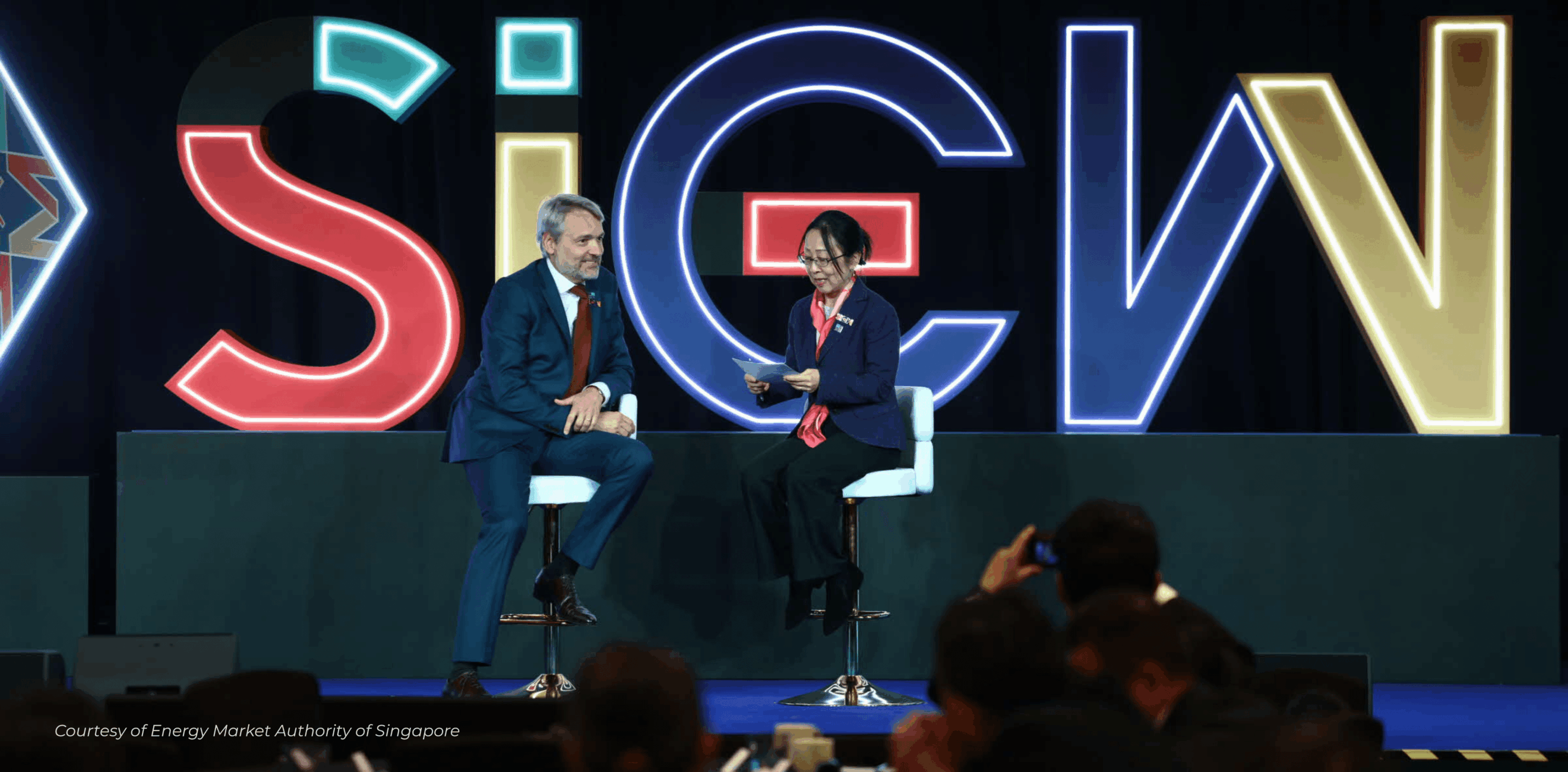
Recently at Singapore International Energy Week (SIEW), 3Degrees’ CEO Philippe Vedrenne highlighted the significant role biomethane can play in Southeast Asia’s decarbonisation efforts. Although global investment in clean energy surpassed $3 trillion in 2024, investment in the global biogas sector reached only $70 billion – a small fraction despite the scale of opportunity.
Biomethane is produced by upgrading biogas generated from organic waste streams such as agricultural residues, animal manure, and municipal waste. Once purified, biomethane is chemically identical to fossil natural gas and can be used across the same applications without equipment changes. This gives it significant value as a decarbonisation option for power generation in geographies with constrained renewable energy availability, as well as hard-to-abate sectors including steelmaking, fertiliser production, and heavy-duty transport, where electrification may remain technically or economically challenging for many years.
State of the regional biomethane opportunity
The International Energy Agency estimates that Southeast Asia could produce 80 billion cubic metres of biogas annually, equivalent to roughly 40% of the region’s current natural gas demand. If 20% of this potential were upgraded to biomethane, it could supply about 8% of total regional gas consumption.
Today, however, biomethane represents only 0.01% of Southeast Asia’s gas supply. This gap is particularly significant because 15–20% of total regional gas demand cannot be readily decarbonised through renewable electricity alone.
Biomethane cost dynamics
The cost of biomethane can present a price premium of up to roughly 100% over fossil natural gas in Southeast Asia. However, this topline figure can vary widely across projects, is expected by some experts to decline over time, and does not fully capture the broader value stack that biomethane offers.
When avoided emissions are valued at $50 per tonne of CO₂, the methane-capture benefit alone is worth $8–10 per MMBtu, covering a substantial portion of the apparent premium. Additionally, biomethane-generated electricity at $70–85 per MWh is cost-competitive with many forms of other 24/7 renewable electricity.
Biomethane co-benefits

Get the full biomethane market update
Download the Fall 2025 Global Market Insights Report for the latest in biomethane.
Market developments and enabling conditions
Biogas and biomethane programmes already exist in Malaysia, Indonesia, and Thailand. Malaysia began injecting biomethane into its natural gas grid in 2025. To accelerate regional deployment, more consistent market structures and harmonised policies will be required.
Key areas of development include:
- Expanding grid-injection and cluster infrastructure around major feedstock locations
- Implementing fuel-mixing mandates for gas distributors to create baseline demand
- Adopting Guarantees of Origin or tracking systems to support market-based trade
- Harmonising certification standards and registries to enable cross-border fungibility and prevent double counting
This policy mix has proven effective in Europe, where a combination of feed-in tariffs and Guarantees of Origin helped build a strong national and regional biomethane market. Europe added 6 bcm per year of biomethane capacity over ten years. Based on available feedstock and emerging policy momentum, Southeast Asia could achieve similar growth in five years, particularly with the support of regional interoperability and certification alignment.
Looking ahead
With abundant feedstock, mature technology, and rising demand for low-carbon fuels, Southeast Asia is well positioned to scale biomethane quickly. Achieving this will require cooperation among policymakers, infrastructure operators, project developers, and buyers seeking credible pathways to reduce scope 1 emissions.
Interested in learning more about how biomethane fits into your decarbonisation plans?
3Degrees can help.