What is biochar and how does it support corporate decarbonization strategies?
As businesses work to address residual emissions, biochar has emerged as a key CDR solution.
How do leading businesses reduce supply chain emissions?
Learn how 3Degrees is helping Google and Meta address supply chain emissions and meet ambitious climate goals.
While the Voluntary Carbon Market (VCM) has become a primary tool for addressing residual emissions, not all credits are created equal. To build a credible, long-term decarbonization strategy, companies must distinguish between temporary fixes and durable carbon removal solutions. As businesses work to address residual emissions, biochar has emerged as a key CDR solution.
In this Biochar guide, we explore:
- What is biochar? Understanding the science of pyrolysis and carbon stability.
- Biochar’s role in corporate decarbonization: Why biochar is a high-integrity choice for ESG reporting and climate goals.
Implementation strategies: How to integrate biochar into your Scope 3 or residual emissions portfolio.
The durability Gap: traditional offsets vs. carbon removal
Traditional nature-based projects—such as reforestation and improved forest management—are vital for biodiversity. However, these carbon offset types face ongoing scrutiny regarding:
- Additionality: Ensuring the project creates a climate benefit that wouldn’t have otherwise occurred.
- Reversal Risk: The danger that stored carbon will be released back into the atmosphere due to wildfires, pests, or land-use changes.
Because of these risks, biological removals are increasingly viewed as a transitionary tool. For a resilient Net Zero strategy, the industry is shifting toward solutions that emphasize long-term sequestration and seeking out Carbon Dioxide Removal (CDR) projects that can guarantee storage for centuries rather than decades.
Why biochar is a leading CDR solution
Many organizations are now prioritizing high-integrity carbon offsets to mitigate long-term climate risk. Biochar carbon removal has emerged as a standout hybrid solution, sitting at the intersection of biological and engineered carbon removal.
Unlike a standing forest, which remains vulnerable to natural cycles, the biochar process converts organic waste into a stable, solid form of carbon through pyrolysis. The core value proposition of biochar is sequestration permanence: it locks carbon away in a secure form for hundreds, if not thousands, of years.
What is biochar?
Before we investigate biochar’s role in corporate sustainability, let’s answer the question, “What is biochar?”
Biochar Definition
At its simplest, biochar is a specialized form of charcoal produced through a thermochemical process called pyrolysis. Unlike traditional charcoal used for fuel, biochar is engineered specifically for carbon sequestration and soil amendment.
While it may look like common charcoal, biochar is created at significantly higher temperatures. This results in a highly stable, porous structure that can produce near-permanent carbon sequestration.
The Science of biochar pyrolysis
Biochar is created by heating organic biomass—such as agricultural waste, crop residues, or forestry shavings—at high temperatures in a nearly oxygen-free environment. This process, known as pyrolysis, is the key to its climate benefits:
- Preventing combustion: The lack of oxygen prevents the biomass from burning. Instead of releasing carbon into the atmosphere, the heat triggers a chemical transformation.
- Solidifying carbon: Pyrolysis turns the biomass into a carbon-rich solid (biochar.
- High carbon retention: According to the US Biochar Initiative, biochar solids successfully store approximately 50% of the carbon found in the original biomass.
Why biochar is carbon removal, not carbon avoidance
It is common to confuse carbon avoidance with carbon removal, but the distinction is vital for corporate climate claims:
- Carbon avoidance: Actions that prevent new human-caused emissions from entering the atmosphere (e.g., protecting an existing forest from being cut down). This is like stopping more water from flowing into an overflowing sink.
- Biochar (carbon removal): This is a proactive intervention in the natural carbon cycle. While plants naturally draw down CO2, they usually release it back when they decay or burn. By converting that biomass into biochar, we “lock” that carbon into a stable form that stays in the soil for hundreds to thousands of years. This acts as a drain, actually removing existing carbon from the “sink” of our atmosphere.
Key benefits of biochar in soil
Beyond its role as a high-integrity carbon offset, biochar provides significant environmental co-benefits when used as a soil enhancer:
- Water retention: Its porous structure holds moisture, making crops more resilient to drought.
- Microbial habitat: The tiny “caves” within biochar provide an ideal environment for beneficial microorganisms to thrive.
Nutrient stability: It helps prevent nutrient leaching, keeping fertilizers in the soil where plants can reach them.
Biochar's role in corporate decarbonization
While many companies utilize the Voluntary Carbon Market (VCM) to support their decarbonization transitions, biochar has emerged as one of the most effective and practical solutions for addressing residual emissions.
Biochar is a leading form of durable Carbon Dioxide Removal (CDR) because it is naturally resilient to degradation. Unlike nature-based solutions like forestry projects, which risk releasing stored carbon back into the atmosphere due to wildfires or land-use changes, biochar remains stable once integrated into the soil.
The core value proposition of biochar is its carbon permanence. While the natural carbon cycle is dynamic, biochar acts as a long-term storage vault, sequestering carbon for hundreds to thousands of years. This allows companies to more closely match the long timescales of fossil fuel emissions with their removal efforts—a critical factor for aligning with the SBTi Corporate Net-Zero Standard. The role of biochar as a long-term carbon sequestration solution makes it an integral component of an impactful carbon portfolio.
High-quality carbon credits depend on rigorous MRV to ensure verified climate benefits. Biochar carbon removal offers a more transparent and quantifiable pathway than many traditional offsets
Biochar offers a significant advantage in carbon quantification and tracking. Its carbon content can be precisely analyzed by third-party laboratories, enabling easy quantification based on weight and application. Furthermore, the market is supported by established, robust registries and standards, such as Puro.earth and the Climate Action Reserve’s US & Canada Biochar Protocol, which provide clear, standardized guidelines. Unlike forestry projects that often rely on complex satellite baseline estimations, biochar provides a definitive, physical chain of custody from the point of production to its application in the soil, reducing the need for complex estimation.
The components of biochar MRV
- Monitoring: Continuous tracking of feedstock types, reactor temperatures, and biochar yield. Standardized, tamper-resistant data systems maintain a digital chain of custody from the production facility to the final end-use location.
- Reporting: Aggregating operational data to calculate net carbon removal credits minus any production-related emissions. This includes documented evidence such as lab analyses, GPS coordinates, and invoices.
Verification: An independent, accredited auditor reviews all documentation and sampling. They perform site checks to cross-reference reported data against primary records, ensuring there is no double-counting before issuing biochar carbon removal credits.
Beyond direct carbon dioxide removal (CDR), biochar supports a broader ESG strategy by providing measurable “co-benefits” across three main sectors:
- Agricultural value chains Integrating biochar into soil significantly enhances soil health. Its porous structure creates a habitat for beneficial microorganisms and improves soil water retention. For food and beverage companies, this supports supply chain resilience and higher crop yields.
- Industrial applications Biochar is an emerging ingredient in the production of “green” concrete and asphalt. By sequestering carbon within infrastructure, companies can lower the embodied carbon of buildings and roads while potentially increasing material strength and longevity.
- Renewable energy generation The pyrolysis process is often carbon-negative or carbon-neutral, as it captures excess heat and biogas. This “waste-to-energy” model can provide a source of renewable thermal energy, supporting energy affordability and reducing reliance on fossil fuels in manufacturing.
Three reasons to invest in biochar as a carbon dioxide removal (CDR) solution
Biochar offers key benefits to businesses looking to invest in long-term carbon sequestration. In this section, we highlight some of the key reasons biochar is being prioritized for implementation in impactful carbon portfolios.

Biochar is a leading high-permanence CDR solution. Through the pyrolysis process, plant residues and biomass are converted into a stable, carbon-rich material that remains locked in the soil for hundreds to thousands of years. Unlike traditional nature-based offsets that are vulnerable to wildfires or decay, biochar carbon credits provide independently verified, traceable climate outcomes that can anchor a corporate long-term decarbonization roadmap.

While many engineered carbon removal technologies are still in the pilot phase, biochar is ready for immediate, large-scale deployment. It utilizes widely available waste feedstocks and commercially proven pyrolysis technology. Investing in high-quality biochar credits today helps de-risk early projects and mobilizes the private capital necessary to build the infrastructure for gigaton-scale carbon removal by mid-century.

Biochar is more than just a carbon sink; it is a tool for climate adaptation and a just transition. When applied to agricultural lands, biochar improves soil structure, nutrient retention, and water-holding capacity. This enhances crop yields and protects farms against extreme droughts and floods. By combining carbon mitigation with rural development and renewable energy co-products, biochar allows companies to advance multiple ESG goals through a single integrated lever.
Future-proofing your climate strategy with biochar carbon removal
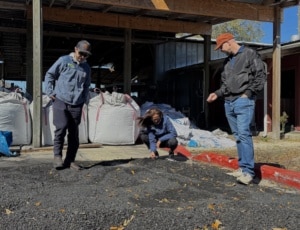
Members of the 3Degrees biochar team at the Florida Citrus Restoration Project site.
As the global demand for durable Carbon Dioxide Removal (CDR) accelerates, biochar has emerged as a premier solution for companies aiming to meet the rigorous requirements of voluntary climate standards.
The scalability of biochar is its primary advantage: organic feedstock is abundant and affordable, and mobile pyrolysis units like those used in the Central Florida Citrus Restoration Project allow for rapid, on-site production. This makes biochar one of the few high-permanence CDR solutions available for immediate, large-scale deployment.
Why partner with 3Degrees for biochar?
Navigating the emerging biochar market requires technical expertise and deep regulatory insight. Partnering with 3Degrees allows your organization to identify high-quality biochar projects that deliver verified emissions removals alongside co-benefits tailored to your corporate ESG goals.
As a leading biochar originator, 3Degrees holds a unique position in the market. We listed the first-ever biochar project on the Climate Action Reserve (CAR), giving us unparalleled insight into project design, carbon accounting, and operational excellence.
Our expertise as your biochar partner
We distinguish ourselves through a hands-on approach to carbon integrity:
- Market-leading experience: We successfully listed the inaugural biochar project on the Climate Action Reserve, setting the benchmark for the industry.
- On-the-ground project development: We work directly with producers to facilitate credit listings, ensuring every project meets the highest standards of additionality and transparency.
- Evolving standards alignment: Our close relationships with global standards bodies ensure that your investments maintain their standing and value as carbon protocols shift and evolve.
Ready to integrate biochar into your decarbonization strategy? Contact 3Degrees today to learn how we can help you secure high-integrity carbon removal.
Move from climate ambition to climate action.
At 3Degrees, our team of carbon experts is ready to help your business move climate ambition to climate action.
Frequently asked questions about biochar
Want to know more about the role of biochar in climate strategy? Explore the answers to these frequently asked questions regarding biochar carbon removal.
Why is biochar gaining popularity now?
While biochar has been used for millennia—most notably in the fertile terra preta (black earth) of the Amazon basin, which remains carbon-rich after 2,500 years—it is seeing a resurgence due to the climate crisis. As corporations face urgent deadlines to meet Net-Zero goals, biochar has become a preferred Carbon Dioxide Removal (CDR) solution because of its exceptional permanence, verified MRV standards, and significant agricultural co-benefits.
How is biochar made?
Biochar is produced through a thermochemical process called pyrolysis. This involves heating organic biomass (such as agricultural residues or forestry waste) in a controlled, oxygen-free environment. Because there is no oxygen, the material does not combust; instead, the heat chemically transforms the biomass into stable, carbon-rich biochar, along with renewable byproducts like bio-oil and syngas.
How does biochar sequester carbon?
Plants naturally capture CO2 from the atmosphere through photosynthesis. Ordinarily, when those plants die and decompose, that carbon is released back into the atmosphere. The biochar process “interrupts” this cycle. By converting organic matter into a stable, solid form, biochar locks the carbon away. When applied to soil, this carbon remains sequestered for hundreds to thousands of years, effectively acting as a permanent carbon sink.
Value chain decarbonization begins with supplier engagement.
Learn how to leverage your supplier network for value chain decarbonization in our latest guide, “Five Strategies for Supplier Engagement.”
3Degrees Group, Inc. (“3Degrees”) is a Commodity Trading Advisor registered with the United States National Futures Association. These materials are provided as general information only. Nothing contained in the material constitutes investment, legal, tax or other advice. Any projections, market outlooks or estimates contained in this material constitute forward-looking statements, and are based on certain assumptions and subject to certain known and unknown risks. Accordingly, such forward-looking statements should not be relied upon as being indicative of future performance or events–past performance is not indicative of future results. 3Degrees encourages you to carefully consider whether a transaction is suitable for you based upon your particular circumstances.
The information contained herein has been given in good faith and every effort has been made to ensure its accuracy. Therefore, carefully consider whether such trading is suitable for you in light of your financial condition. 3Degrees accepts no responsibility for any losses, whether sounded in tort, contract, negligence, or otherwise, directly or indirectly resulting from any reliance placed on any part of the contents of these materials and disclaims any liability for its accuracy or correctness, including as to any errors or omissions in any materials provided by 3Degrees. Swaps, futures and options trading involve significant risk of loss and may not be suitable for everyone.