Why Removals Now?
To meet ambitious climate goals, businesses need to invest in high-quality carbon removals—before it's too late.
Ready to leverage supplier relationships for scope 3 decarbonization?
Summary Snapshot
- Carbon removals are an absolute necessity for reaching net zero goals, and demand for high‑quality, durable removals (such as biochar) is already outpacing near‑term supply, with a growing share of future volumes pre‑sold through multi‑year offtake agreements—creating a clear advantage for early movers.
- Acting early strengthens addtionality claims: forward offtake commitments can be the difference between a project getting built or not, providing credible evidence that a company’s investment unlocked real, otherwise‑unlikely climate impact.
- Removals represent a material future cost; relying on the spot market exposes companies to scarcity, price spikes, and volatility, whereas long‑term offtake agreements help lock in supply, stabilize budgets, and share in future cost reductions as technologies scale.
As businesses work toward their corporate decarbonization goals, many are recognizing a new reality in the fight for net zero: without the strategic implementation of carbon removals, many companies’ ambitious climate targets will be impossible to reach.
Beyond corporate climate ambitions, without removals businesses will be simply unable to limit warming to the critical threshold of 1.5° C above pre-industrial levels to , as defined by the Paris Agreement, in order to avoid the worst climate impacts. As the Intergovernmental Panel on Climate Change (IPCC) stated in a recent assessment, “All pathways that limit global warming to 1.5°C with limited or no overshoot project the use of carbon dioxide removal (CDR) on the order of 100–1000 GtCO2 over the 21st century. CDR would be used to compensate for residual emissions and, in most cases, achieve net negative emissions to return global warming to 1.5°C following a peak.”
In this article, we’ll examine why now is the time for businesses to consider the role of removals in their net zero strategies–not in the future–and provide actionable strategies to ensure that your removals approach aligns with the latest guidance from standards bodies and industry experts.
With these frameworks in mind, the question is not if businesses seeking to meet net zero goals will need to invest in high-integrity removals, but when.
Standards bodies’ stance on carbon removals shifts from “if” to “when”
In recent years, the Science Based Targets initiative (SBTi) has steadily tightened its net zero framework, making clear that carbon removals must be a defined, non-negotiable part of a corporate net zero strategy. Under the SBTi’s 2025 Corporate Net-Zero Standard, businesses are expected to decarbonize their value chains in line with pathways that limit warming to 1.5° by 2050–a goal that, for many, means cutting value chain emissions by 90%–and then address the remaining residual emissions. As stated in the Corporate Net-Zero Standard, businesses cannot claim to have reached net zero until they have addressed these residual emissions.
SBTi refers to this step as “neutralization,” meaning that residual emissions must be rendered neutral by balancing them with an equivalent quantity of additional, permanent removals every year from the net zero target date onwards. This focus on permanence and additionality ensures that businesses will be held to a high standard when claiming true net zero, but also limits the usage of conventional avoidance to address residual emissions. While some details like durability thresholds, eligible removal pathways, and recognition frameworks are still being refined, it’s increasingly clear that high-additionality, high-durability removals are the most reliable path to the neutralization of residual emissions.
Three reasons why businesses must address carbon removals in 2026
In order to reach net zero targets, businesses will need to leverage high-integrity removals to address residual emissions. Yet major questions remain: what types of removals should be prioritized, and when should buyers begin investing to stay ahead of key climate milestones?
While it may be tempting to delay action and wait for further clarity from standards bodies, postponing action, in this case, could come with steep costs–both for corporate decarbonization goals and the planet.
Below, we detail three key reasons why businesses must begin addressing expected residual emissions in 2026.

Premium, high-durability removals like biochar are already seeing surging demand. A staggering 93% of credits that will be issued from 2025 carbon removal activities have already received commitments from buyers, with many buyers already competing for 2026 tonnage. Carbon dioxide removals (CDR) need to scale significantly in order to align with net zero pathways, yet only a small fraction of contracted volumes have actually seen delivery to date–underscoring how thin current supply is relative to what both science and standards bodies indicate will be required for major businesses to reach net zero.
As availability tightens, corporate buyers are aggregating large volumes of future removals through multi-year offtake agreements, effectively locking in tomorrow’s removals before they exist. This trend continues in 2026. A report from leading biochar producer Supercritical showcases that, as of 2025, as much as 28% of supply is already claimed via forward offtake agreements through 2026.
While these forward offtakes send strong demand signals to the broader market, major obstacles still limit rapid scaling of removals. Complex financing requirements, permitting processes, and construction timelines mean that the journey from initial project scoping to credit delivery often spans multiple years. In order to finance these long-term projects, producers depend on predictable revenue streams from forward offtake agreements to raise debt and equity; in practice, these agreements not only secure near-term access to removals, but ensure that future supply finds its way to the market.
As the removals sector navigates growing scarcity, the advantage of being positioned as an early mover is clear. First movers gain access to removals credits in the near-term, while building the relationships and infrastructure necessary to ensure long-term access to future credits.
The Takeaway:
Corporate carbon offtake commitments represent a key market demand signal, spurring the creation of future supply. With further scarcity projected into the future, businesses can ensure both the existence of and access to future removals supply by committing now to forward offtake agreements.

Early actors play a key role in enabling removals producers to build and scale projects. By entering forward-offtake agreements, early buyers provide “bankability” to projects, allowing them to access capital through financial institutions that might otherwise be unavailable. The benefit of early-action, however, isn’t limited to project developers. For businesses leveraging removals toward net-zero goals, early investments can act as indisputable proof of additionality, and reinforce the claim that, without their involvement, these removals would not have occurred.
One example of how early action can act as evidence of additionality: In 2026, a food manufacturer signs a 10‑year forward offtake agreement with a start‑up building a new biochar facility. The contracted cash flows unlock project debt from a commercial bank that had previously deemed the venture too risky. Without this anchor buyer, the plant would not have been financed or constructed. As the biochar facility begins operating, the manufacturer retires the resulting removal credits against its long‑term net‑zero target, pointing to the forward offtake agreement as clear evidence that its early commitment was decisive in bringing the project online.
This example underscores a key element of additionality–that the climate benefits generated by a project would not have occurred in a business-as-usual scenario. As scrutiny of removals intensifies, early investments can serve as a bulwark, allowing companies to point to their role in bringing projects online, rather than providing incremental revenue for projects that would have proceeded without corporate involvement.
The Takeaway:
Shifting from a passive offsetting mindset to proactive early action allows corporate climate actors to play a catalytic role in the market. This shift offers a narrative advantage as well: companies that help enable genuinely additional projects demonstrate a higher level of climate integrity and insulate themselves from future disputes.

Removals are more than a net-zero requirement. They represent a material future cost that calls for accurate forecasting, management, and de-risking. While future pricing is uncertain, one thing is clear: as scarcity increases, the price for these assets is likely to rise sharply, and the cost of securing the volumes needed to hit net-zero targets could skyrocket. High-quality removals credits are already priced at a premium, compared to conventional avoidance offsets.
Companies that rely heavily on the spot market are likely to be exposed to price shocks and the increasing volatility of supply and demand divergence, resulting in budgetary uncertainty in the face of looming emission reductions deadlines.
In contrast, early action through multi-year forward offtake agreements offer budgeting stability, since unit prices and volumes are contractually defined. These agreements reduce the risk of being priced out of credible options in future years, and offer access to value-sharing mechanisms , in which prices drop as technology and projects scale. This dynamic positions early actors to benefit from technological improvements and lower per-unit costs over time.
The Takeaway:
By locking in multi‑year forward offtake agreements now, companies can avoid escalating spot‑market prices and secure predictable, budgetable exposure. As emerging removal technologies scale, their unit costs are likely to fall, creating opportunities for value‑sharing structures that pass part of those savings to early buyers. This means frontrunners are not just hedging against future price spikes and supply risk; they are actively positioning to capture the economic upside of a maturing removals market while demonstrating credible, long‑term commitment to net‑zero targets.
From ambition to action: How 3Degrees enables catalytic climate leadership
At 3Degrees, we’ve spent the last two decades helping the world’s leading businesses work toward their climate goals. We maintain a close relationship with leading standards bodies and offer a proven track record of helping our clients operationalize the shift from avoidance to removals on an enterprise level.
As organizations move to act decisively on removals, 3Degrees assists by applying rigorous, project level due diligence across removal opportunities along with bespoke project sourcing. Our careful evaluation of factors including scientific basis, permanence, additionality, and environmental and social impacts ensures that corporate investments are not only defensible on paper, but make a genuine contribution to the fight for net zero.
Our work on carbon removals isn’t just in the office; it’s on the ground. Our team of originators works closely with project operators from initial project scoping to the final delivery of credits. Driven by expert monitoring, reporting, and verification (MRV), our team helps transform on-the-ground impact into high-integrity claims for corporate buyers. 3Degrees simplifies procurement to help you meet near-term and long-term goals. Whether that’s establishing a pathway to achieve net-zero or a custom portfolio of high impact projects that best suits the impact your company wants to make. Our Carbon Removal Suite offers businesses access to both near-term options and exposure to the key technologies shaping the future of decarbonization.

CDR Bridge offers immediate access to verified carbon removals, predominantly nature-based, complemented by a curated selection of emerging and innovative project types. CDR Bridge allows organizations to engagewith the removal market affordably today.
 CDR Catalyst provides an opportunity for customers to further accelerate their commitment to emerging and innovative carbon removal solutions. With CDR Catalyst, companies can introduce high-durability credits to their existing strategy at a manageable scale. This approach provides the critical ‘early-stage’ support these technologies need to mature, turning your corporate climate goals into a powerful engine for market-wide innovation.
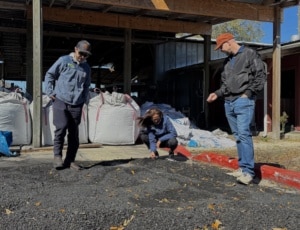
Members of the 3Degrees biochar team visiting the Florida Citrus Project biochar site.
Through our close, collaborative relationship with our project partners, 3Degrees clients have access to carbon removal opportunities that are both technically sound and strategically aligned with their long-term sustainability goals.
In 2026, climate leadership is defined by action—not ambition. Companies that take tangible procurement steps toward long-term offtake agreements today are the ones who will define tomorrow’s climate conversation. Connect with 3Degrees, and learn how to leverage carbon removals to turn your climate ambition into climate action today.
Our carbon team helps sustainability leaders move from climate ambition to climate action.
At 3Degrees, our industry-leading team of carbon experts are ready to help you build a scalable, high-impact carbon portfolio. Reach out today, and learn how you can turn climate ambition into climate action.
Frequently asked questions about carbon removals
Want to know more about carbon removals? Take a look at the answers to these frequently asked questions:
What is the difference between avoidance and removal?
Carbon avoidance prevents new emissions from entering the atmosphere (e.g., protecting a forest), whereas carbon removals remove existing CO2 and sequester it permanently. Examples of removals include biochar, Enhanced Rock Weathering (EWR), and Direct Air Capture (DAC).
Is there currently enough supply to meet corporate demand for removals?
No. Demand for high-quality, durable carbon removals (like biochar) is currently outpacing supply. Approximately 93% of credits from 2025 activities were pre-committed, and a large share of 2026 volume is already claimed via forward offtake agreements.
What is a forward offtake agreement?
A forward offtake agreement is a long-term contract where a buyer commits to purchasing carbon removal credits from a project before they are actually produced. This provides the developer with the bankability needed to secure financing and start construction, ensuring future supply of removals.
Value chain decarbonization begins with supplier engagement.
In our latest guide, we provide five actionable strategies to bolster supplier engagement in climate objectives, and turn existing supplier relationships from transactional to transformational.
3Degrees Group, Inc. (“3Degrees”) is a Commodity Trading Advisor registered with the United States National Futures Association. These materials are provided as general information only. Nothing contained in the material constitutes investment, legal, tax or other advice. Any projections, market outlooks or estimates contained in this material constitute forward-looking statements, and are based on certain assumptions and subject to certain known and unknown risks. Accordingly, such forward-looking statements should not be relied upon as being indicative of future performance or events–past performance is not indicative of future results. 3Degrees encourages you to carefully consider whether a transaction is suitable for you based upon your particular circumstances.
The information contained herein has been given in good faith and every effort has been made to ensure its accuracy. Therefore, carefully consider whether such trading is suitable for you in light of your financial condition. 3Degrees accepts no responsibility for any losses, whether sounded in tort, contract, negligence, or otherwise, directly or indirectly resulting from any reliance placed on any part of the contents of these materials and disclaims any liability for its accuracy or correctness, including as to any errors or omissions in any materials provided by 3Degrees. Swaps, futures and options trading involve significant risk of loss and may not be suitable for everyone.