While much attention is given to on-road vehicles, off-road equipment and transportation applications also present significant opportunities for generating clean fuel standard (CFS) credits. When we think about North America’s CFS programs, electric vehicles (EVs) or battery electric buses might be first to come to mind, but similar revenue generating opportunities exist for the lesser-known off-road vehicles and equipment in carbon credit markets.
If you operate forklifts, cargo handling (material handling) equipment, yard trucks, or other off-road vehicles and have begun switching to alternative fuels or low carbon technologies, you could be eligible to earn valuable credits under six active or incoming programs: Canada’s Clean Fuel Regulation (CFR), California’s Low Carbon Fuel Standard (LCFS), Oregon’s Clean Fuels Program (CFP), Washington’s Clean Fuel Standard (CFS), British Columbia’s LCFS, and New Mexico’s Clean Transportation Fuel Program (CTFP).
In this blog, we’ll cover the basics of how CFS programs work, what off-road transportation types are eligible, and the nuances involved with these application types.
Off-road applications eligible for clean fuel standard credit generation
All six active or incoming programs create financial incentives for the use of low-carbon fuels and electricity in place of conventional gasoline or diesel. When you use or supply a fuel with a lower carbon intensity (CI) than the regulatory standard (baseline), you generate credits that can be sold to regulated parties (typically fossil fuel suppliers) who need them to meet compliance obligations.
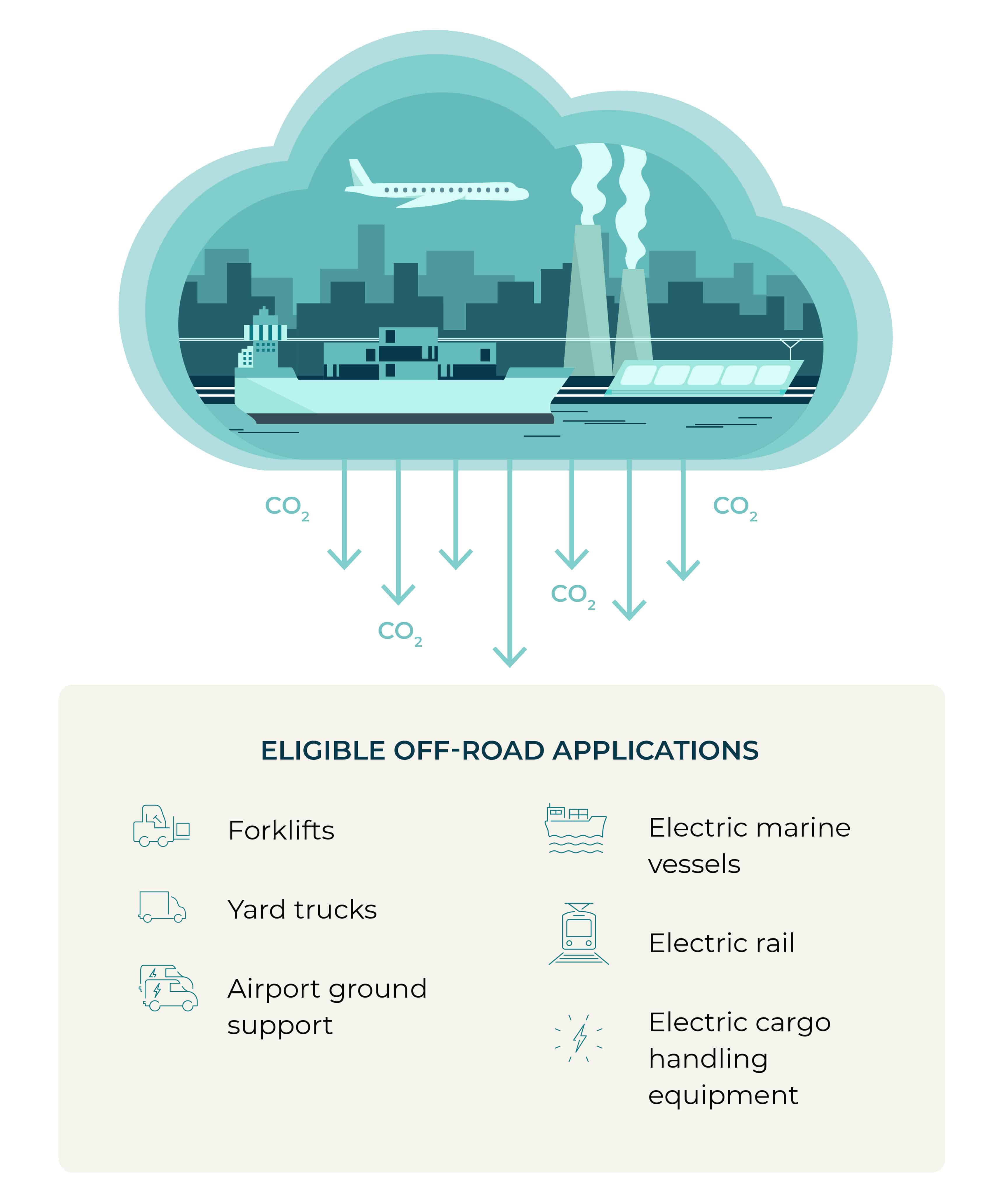
Each program has its own list of eligible equipment and specific rules, but the trend is clear: if you’re displacing diesel or gasoline with a low-carbon alternative in off-road transportation, you’re likely eligible to generate credits.
Common eligible off-road equipment and vehicles include:
- Electric and hydrogen forklifts
- Electric yard trucks and terminal tractors
- Electric cargo handling equipment (eCHE) at ports or warehouses, for example
- Rubber-tired gantry cranes, top handlers, side handlers, reach stackers, loaders, aerial lifts, excavators, dozers, etc.
- Electric ground support equipment (eGSE) at airports
- Electric rail applications (with some program-specific caveats)
- Shore power for refrigerated trailers and vessels
- Electric ocean going vessels (eOGV)
As previously mentioned, each program is different in the way they support off-road credit generation.
| Program | Eligible Off-Road Applications | Key Credit Pathways |
|---|---|---|
| Canada Clean Fuel Regulations (CFR) | Forklifts, yard trucks, eCHE, eOGV, rail, construction and mining equipment |
Low-carbon fuel supply, electrification |
| California Low Carbon Fuel Standard (LCFS) | Forklifts, eCHE, yard trucks, eOGV, rail | Low-carbon fuel supply, electrification, capacity-based (ZEV infrastructure)
|
| Oregon Clean Fuels Program (CFP) | Forklifts, eCHE, yard trucks, electric airport GSE, eOGV, electric rail
|
Low-carbon fuel supply, electrification |
| Washington Clean Fuel Standard (CFS) | Forklifts, eCHE, eOGV, electric yard trucks, electric rail, and alternative marine fuel (e.g. LNG)
|
Low-carbon fuel supply, electrification, capacity-based (ZEV infrastructure) |
| British Columbia Low Carbon Fuel Standard (LCFS) | Forklifts, eCHE, electric yard trucks, rail, airport eGSE, eOGV
|
Low-carbon fuel supply, electrification |
How to generate clean fuel standard credits
You might be wondering how to start taking advantage of the significant incentives that your organization can access. Assuming your fleet has already begun the transition to using low-carbon fuels, the first step towards participation in CFS programs is to identify all eligible activities you may already be performing under each program. All low-carbon fuels must be reported under what is called a ‘pathway,’ or an approved process (e.g. RNG production or electricity charging) to calculate emissions reductions.
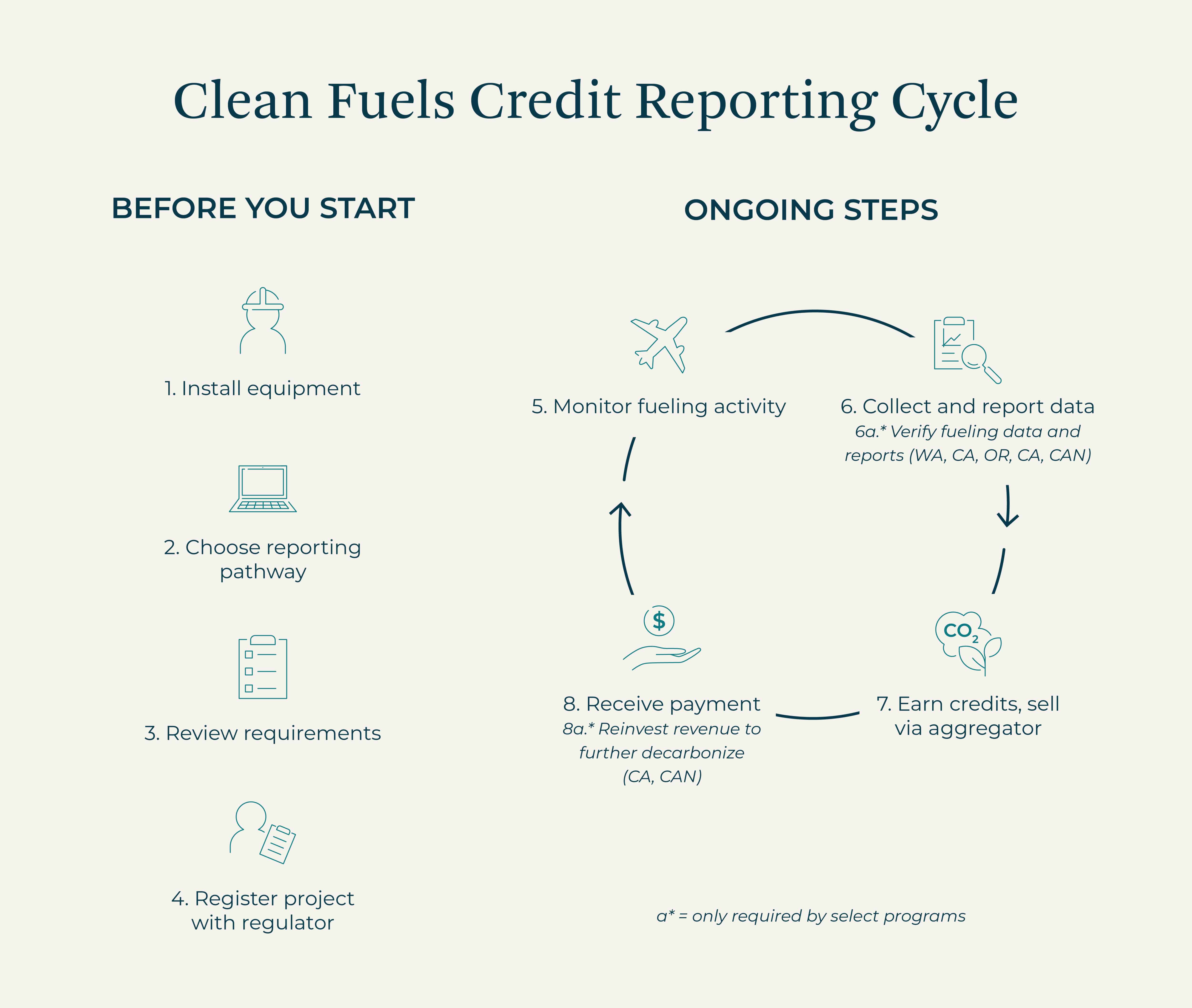 After your organization has identified which pathway(s) are needed, the next step is to register your equipment with the regulator administering that program.
Once approved, your organization can begin generating credits as fuel is delivered into the fuel pool or dispensed into an eligible vehicle. Proof of fuel deliveries is shown by routine reporting – typically on a quarterly or annual basis, depending on the program – and credits are issued based on the reported fueling data.
Other considerations
When it comes to off-road applications, there are a few special considerations that are worth bearing in mind, including:
- Revenue Use Requirements: Some programs (notably California’s LCFS) require that revenue from credit sales be reinvested in further decarbonization or EV infrastructure.
- Regulator Approval: Under certain programs, eligibility for marine and rail applications may require regulator approval or be limited to specific fuel types.
- Capacity-Based Credits: California and Washington offer credits that recognize the value of the capacity created by installing ZEV infrastructure, such as DC fast chargers or hydrogen stations. In most programs, it is the owner that is eligible for credit generation.
- Credit Stacking: Fleet and EV charging station owners in British Columbia can maximize credit generation by ‘credit stacking’ or participating in both the federal Clean Fuel Regulations (CFR) and the provincial Low Carbon Fuel Standard (LCFS)
All of the programs have strict quality assurance thresholds to meet. 3Degrees’ turn-key service offering handles all of these requirements, including oversight of verification activities for our clients.
Why participate?
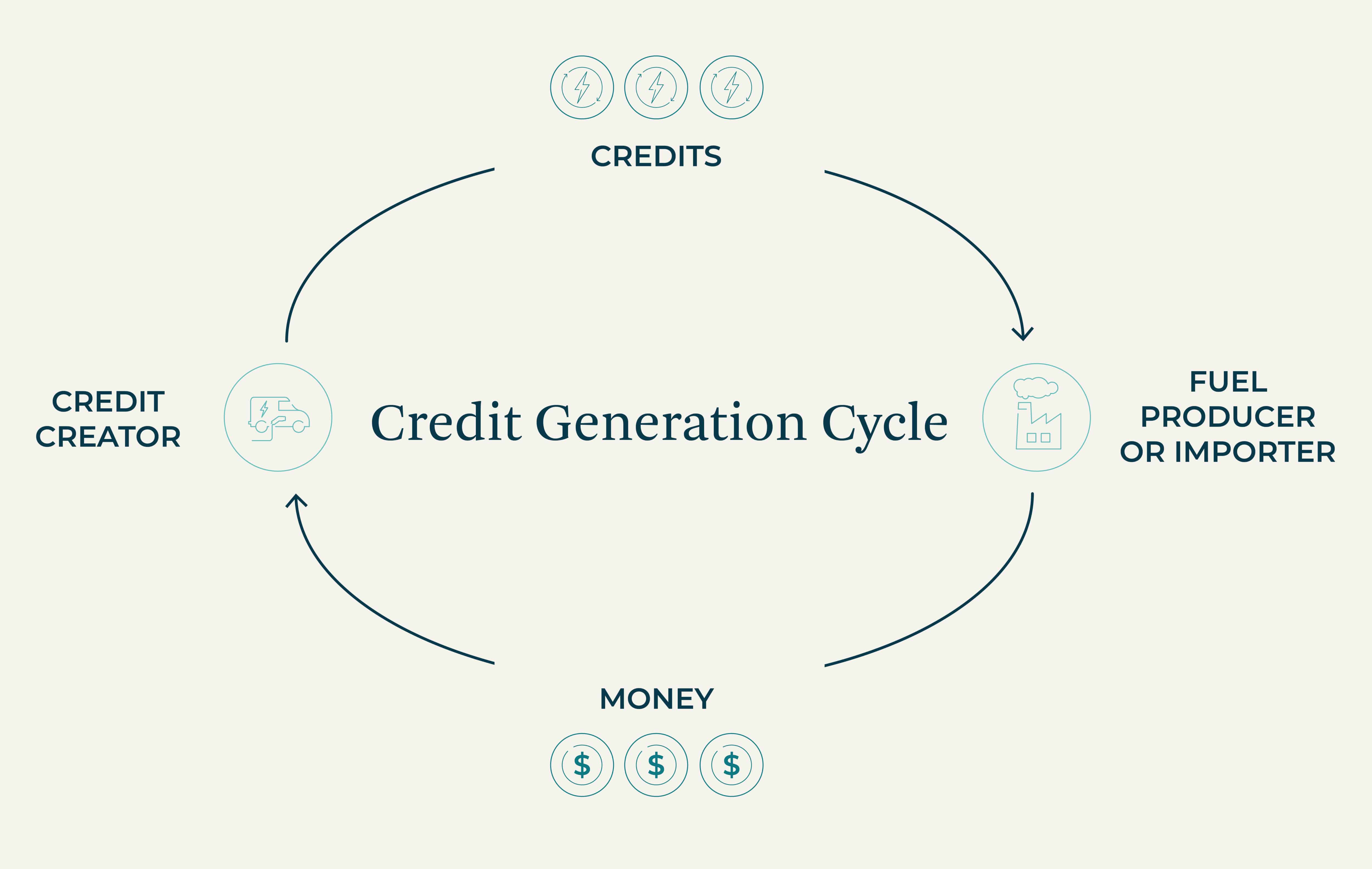
Diversified fleets that lower the carbon intensity of the fuel used to power their transport, handling, and shipping equipment are eligible to earn valuable credits under Clean Fuel Standard (CFS) programs. Revenue can be generated for every eligible kWh or gallon of low-carbon fuel used in off-road operations.
The sale of CFS credits creates an additional revenue stream to fund operating budgets and to further the transition to cleaner fuels. By participating in CFS programs, companies also help accelerate the adoption of clean fuel technologies in heavy-duty and industrial sectors.
Actors in this space are facing strict regulations that require GHG emission reductions. Companies that electrify now can stay ahead of regulations like the Advanced Clean Fleets (ACF) Regulation and similar policies from California Air Resources Board (CARB), while also generating revenue through market-based incentive programs. Fossil fuels are the industry standard for marine vessels and terminal cargo equipment, but sustainable and compliant alternatives are available for much of the equipment serving port operations, airport terminals and other growing transportation networks.
Maximize your value
For organizations contemplating participation, the lesson is clear: entering the market early can maximize revenue opportunities. CFS programs are not intended to be permanent and the targets set will eventually be met. As these programs continue to evolve, getting started now ensures that your organization can maximize the financial benefits while becoming a significant contributor towards our collective transportation decarbonization goals.
Few off-road equipment operators are expected to apply for credits due to the cumbersome nature of reporting requirements, but 3Degrees alleviates the administrative burden and ensures maximum value for our clients. With deep expertise in clean fuel markets, 3Degrees will guide your journey from initial registration to maximizing credit revenue.