The window to act under current guidance is narrow
The Science Based Targets initiative (SBTi) Corporate Net-Zero Standard (CNZS) V2.0 introduces fundamental shifts across climate target setting, implementation, and reporting. For senior sustainability and energy leaders, the immediate imperative has shifted from target ambition to portfolio readiness.
As standards introduce stricter deliverability and temporal rules, acceptable procurement boundaries are shrinking. Energy teams face a clear choice: adapt procurement strategies now or navigate significantly higher costs and operational complexity later.
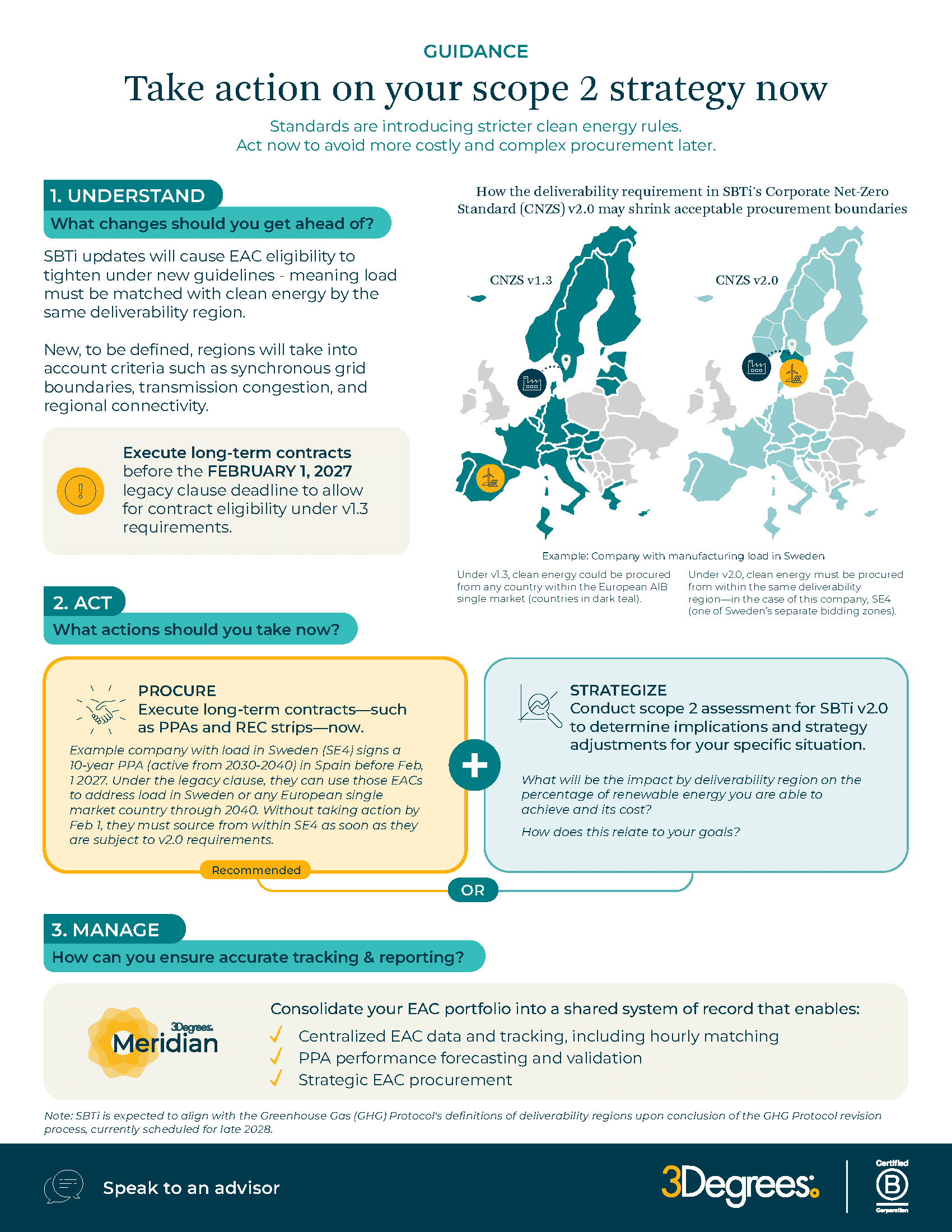
Our latest infographic breaks down how CNZS v2.0 alters scope 2 eligibility rules, and why the legacy clause is so important.
How to structure your action plan
Under previous CNZS v1.3 guidance, companies enjoyed broad regional flexibility. For instance, a corporation with manufacturing operations in Sweden could source energy attribute certificates (EACs) from anywhere within the European AIB single market.
Under CNZS v2.0, rules tighten considerably, including granular deliverability boundaries, temporal matching requirements, and sophisticated tracking/reporting. Get a visual breakdown of how geographic boundaries are shifting and how to structure your 3-step action plan.
- Understand: Map your current Scope 2 footprint against upcoming deliverability regions and transmission boundaries.
- Act: Leverage the transition window to execute long-term contracts prior to Feb 1, 2027, grandfathering contract eligibility under v1.3 rules.
- Manage: Centralize EAC tracking, PPA performance forecasting, and hourly matching using a robust system of record like 3Degrees Meridian
Download the infographic
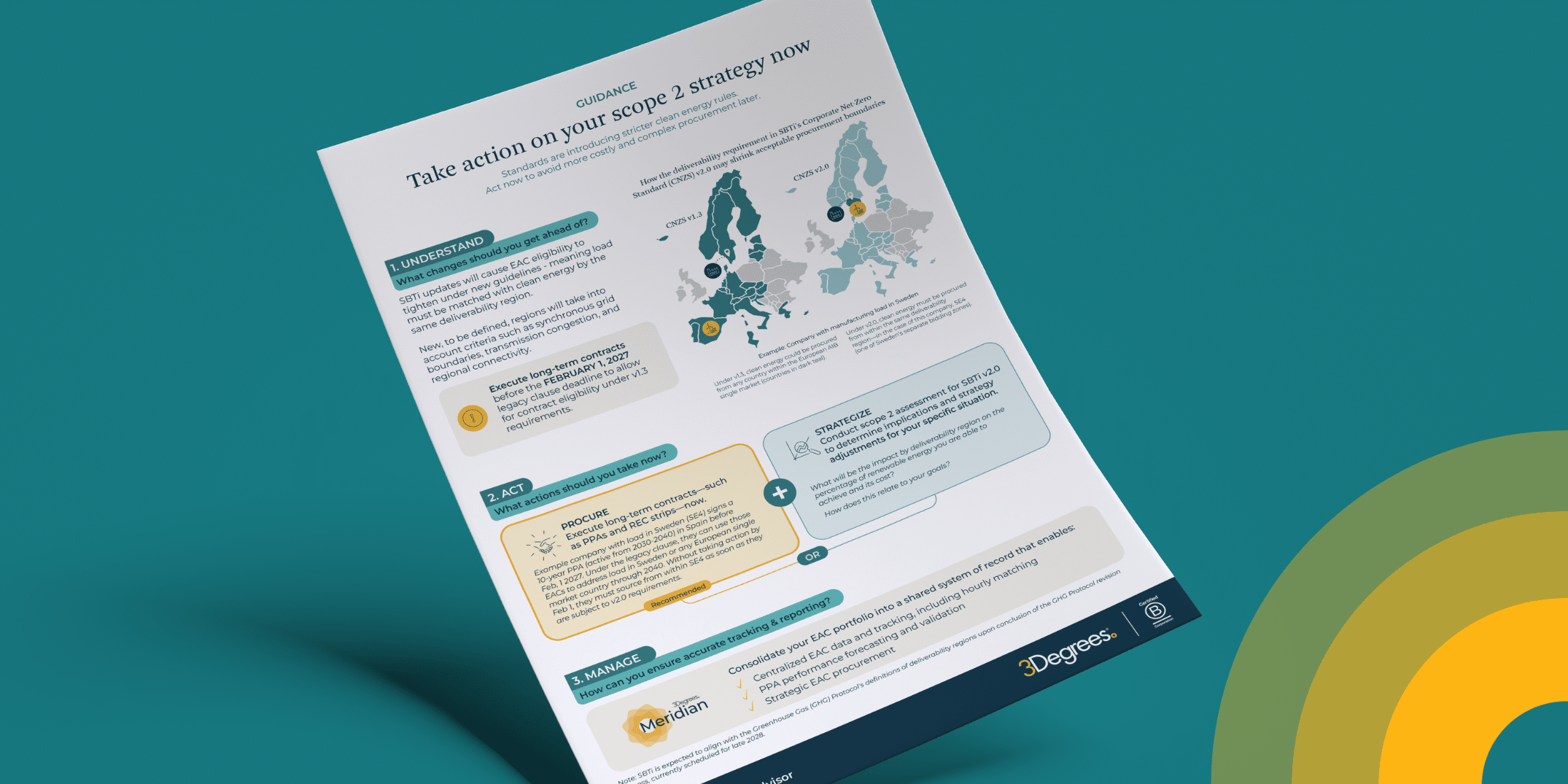
Ready to explore this critical strategic procurement window? Click the asset below for concrete steps your organization should take today.