
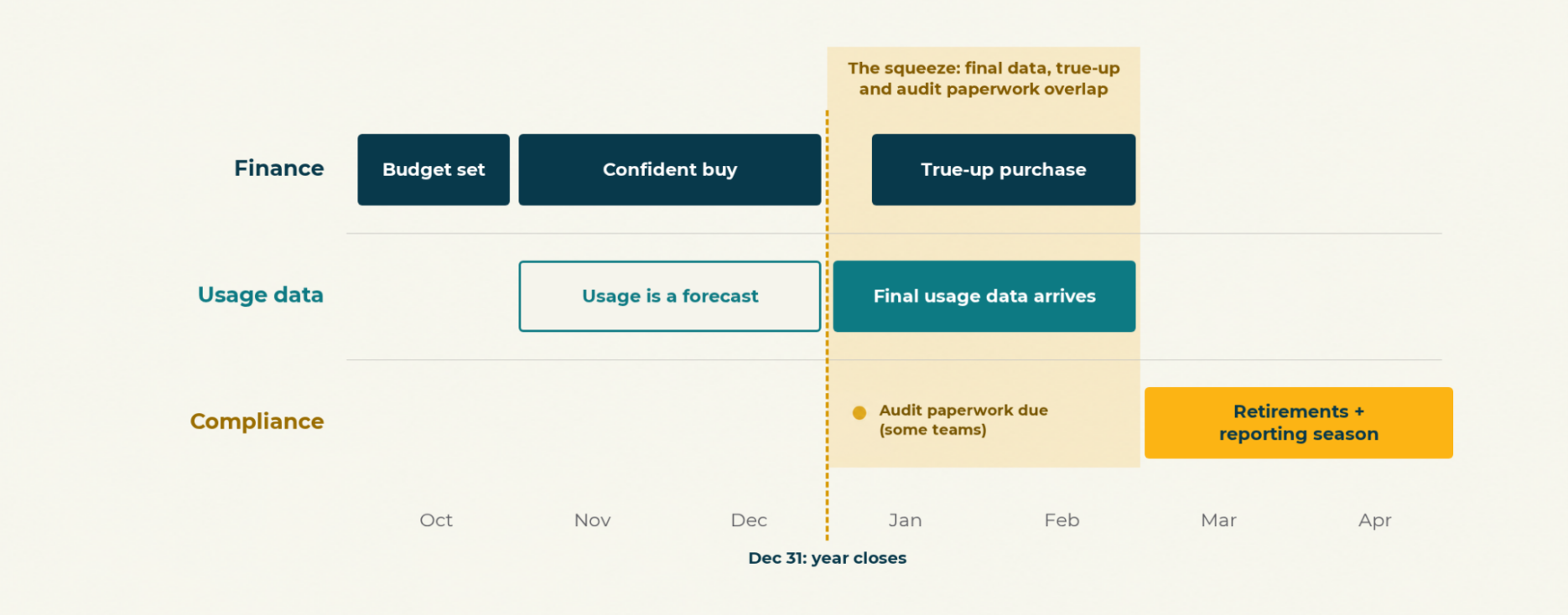
Most EAC budgets are set in the fall. Final electricity use isn’t known until after December 31. And for some teams, audit documentation is due by mid-January.
The challenge is estimating the EACs’ cost and committing to a number before you have final usage data. All this unfolds within a tight audit timeline that may leave little room for adjustments.
The three calendars
Every year-end EAC plan runs on three calendars, and they don’t line up.
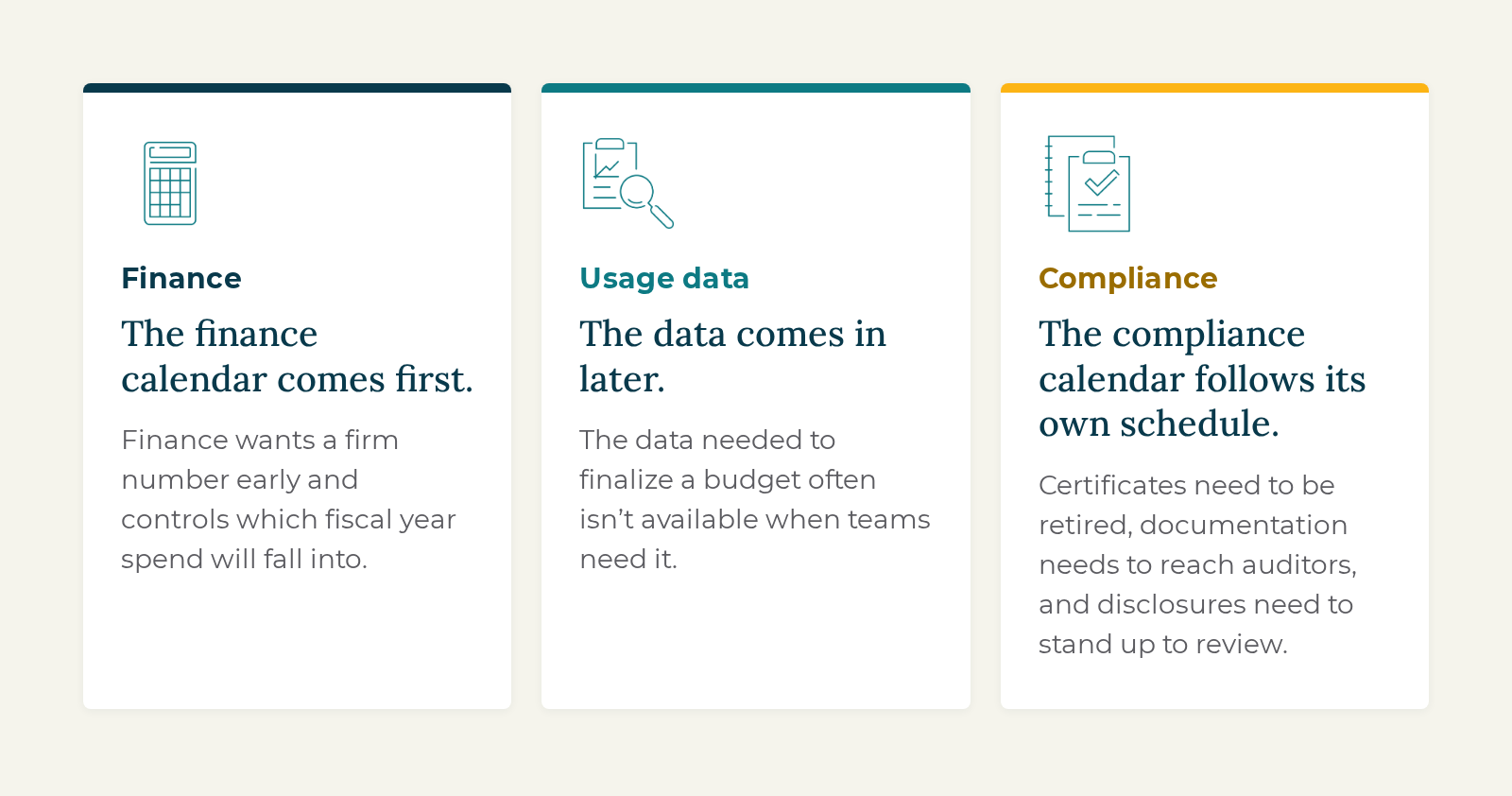
The finance calendar comes first. Budgets are locked early, often with only a few weeks to prepare an initial draft. Finance wants a firm number early and controls which fiscal year spend will fall into. Some budgets are set without monthly accruals, so timing of every purchase matters.
The data comes in later. The data needed to finalize a budget often isn’t available when teams need it. Utility bills and meter data can take weeks to arrive, which means November and December usage is still an estimate when budgets are due. Teams need usage through December 31 for the final true-up, and new sites may not have enough historical data for a reliable estimate.
The compliance calendar follows its own schedule. Certificates need to be retired, documentation needs to reach auditors, and disclosures need to stand up to review. Standard retirement schedules often fall in late Q1, right in the middle of reporting season, and eligibility issues can surface during verification, after the period has closed.
Each calendar makes sense on its own. The risk is in the gaps between them.
Three approaches to year-end buying
Corporate buyers tend to take one of three approaches. Each approach addresses the realities of one calendar, while also creating risk in another.
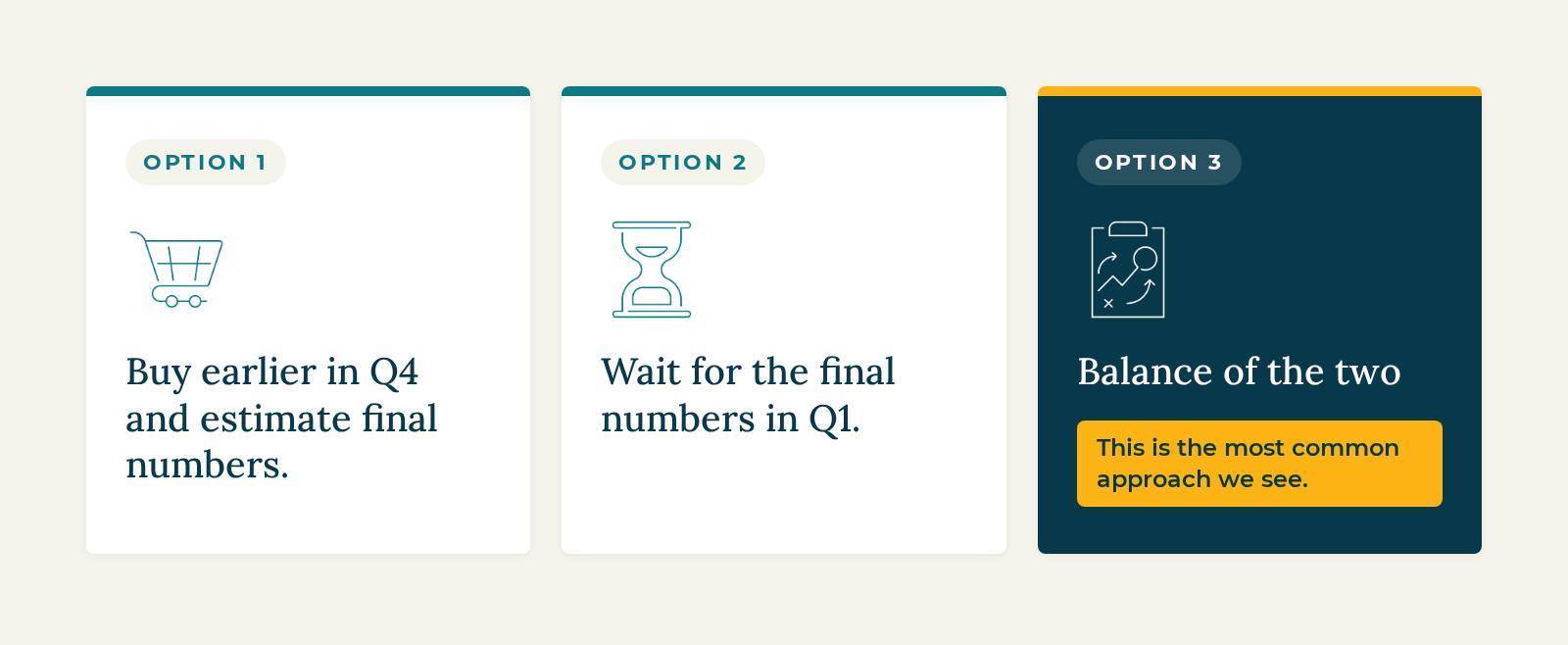
Option 1: Buy earlier in Q4 and estimate final numbers.
- Pros: You get price certainty sooner, and a larger, single purchase may help you earn better volumetric pricing.
- Cons: Buyers risk overbuying to ensure they hit their target. This can lead to spending unnecessary budget.
Option 2: Wait for the final numbers in Q1.
- Pros: You buy exactly the volume you need.
- Cons: You are up against tight retirement and reporting deadlines during one of the busiest buying periods of the year. If prices rise early in the year, you have little control, because you must buy before the deadline. We’ve seen how quickly this can happen. In 2017 and 2018, national REC prices more than tripled in a short window, and some corporate buyers needing large volumes had to triple their budgets almost overnight.
Option 3: Balance of the two
- Pros: Making a bulk purchase earlier and then trueing up in January balances price and volume risks. This is the most common approach we see.
- Cons: The true-up may carry a small-volume markup, and requires managing more contracts and paperwork.


Start by estimating demand by country or market boundary, not as one portfolio total. Net out existing coverage including PPAs, utility green tariffs, and EACs already in inventory, to understand the true gap. Each remaining line is a portion of demand that needs a specific type of certificate.
Next, price each line on its own terms. Last year’s average reflects last year’s mix. A line with region- or project-specific requirements may cost more than the average suggests, and some markets cost far less than others. Relying on a single blended price can hide that nuance. As we’ve addressed earlier, a budget built on averages is hard to defend.
Finally, share data timelines with finance, and agree upon which fiscal year the larger portion and true-up will fall into to avoid running past an approved budget. We’ve seen a January true-up come in larger than planned and push past a client’s approved purchase order, leaving an invoice on hold until the budget could be adjusted.

Map out exactly when your final numbers will arrive. Identify which sites report last, which ones rely heavily on estimates, and which locations have little historical data.
Next, gauge how much your load varies. This variability will determine which of the three purchasing options best fit your needs and how much volume you can confidently buy upfront. Steady, predictable loads can comfortably support a larger upfront purchase.
Finally, establish internal data deadlines. Collection can take longer than expected, extending into February and leaving little time to react ahead of retirement and reporting deadlines.

Year-end buying doesn’t end with a purchase; it ends with retired certificates and documentation an auditor will accept. Start with the date your auditor needs paperwork and work backward: first, the retirement, then the true-up purchase, and finally usage data – keeping in mind that documents from various sources (utility, broker, direct purchases, etc.) are all delivered on their own timelines.
Check eligibility before you buy, not during verification. Gaps found after the reporting period closes are the hardest kind to fix. This includes certificates that turn out not to qualify for a framework because of where they were retired. In Europe, GOs are valid for 12 months after production, so a true-up purchase made early in the new year may only cover the later months of the consumption year. The SBTi Corporate Net-Zero Standard V2.0 adds another check by requiring market instruments to come from the same deliverability region as the consumption. As we covered in our breakdown of the V2.0 updates, a portfolio that looks fully covered nationally can still have regional shortfalls.

This plan only works if it updates when calendars move and inputs shift, whether that’s new usage data, a site change, or a revised quote. A big-picture estimate doesn’t update at all. A detailed spreadsheet does, but only if someone rebuilds it by hand during the busiest stretch of the year.
3Degrees Meridian is built to keep these inputs connected. It holds your own demand data alongside your supply and allocations. It matches demand by geography, vintage, technology, market boundary, and certification rules for the framework you report against. It also shows the shortfall by market, vintage, and rule before verification does, so teams can neither over-buy nor scramble at year-end.
3Degrees advisors can help interpret the findings and determine the best procurement strategy to meet your targets. That’s where technology, advisory, and trading work best together.
One question for each calendar
Finance: is remaining demand estimated by market, and has finance agreed on which fiscal year the main and true-up purchases will fall into?
Data: Do you know when your final numbers will arrive and how much your load varies to determine whether your buying approach matches both?
Compliance: Is every line confirmed eligible before you buy, with retirement and documentation dates set from the audit deadline?
See for yourself
Your year-end gap is unique to your portfolio across volume, price, and timing. See your open demandand know exactly when to act.