3Degrees Meridian
Turn EAC management complexity into portfolio value.

EAC portfolio management is a financial lever, not a cost center
Every sustainability team managing a global energy attribute certificate (EAC) portfolio knows the moment: the reporting period is ending, certificates are scattered across registries in a dozen jurisdictions, and teams are left scrambling to reconcile invoices, confirm vintages, retire the right volumes, and prepare for auditing. The hours add up quickly—and so do the risks.
Yet, many organizations overlook a critical fact: EAC portfolio management is one of corporate sustainability’s most reliable drivers of positive, measurable ROI. It’s not a compliance expense but a lever that, when managed well, actively improves financial performance, secures audit readiness, and ensures program integrity.
As 2030 climate targets approach, corporate renewable energy procurement is accelerating. Portfolios are growing larger, more global, and significantly more complex— combining procurement of PPAs, VPPAs, RECs, GOs, and I-RECs across jurisdictions. Meanwhile, expectations for temporal and geographic matching are driving more demand for more granular, verifiable management.
The result is a widening gap between procurement ambition and operational execution. Closing that gap is where the ROI lives.
EAC portfolio management is the centralized, continuous tracking, optimization, and retirement of energy attribute certificates—including RECs, GOs, and I-RECs—across global renewable energy procurement programs.
It ensures that certificates are:
- Accurately tracked across all global registries and jurisdictions
- Properly allocated and retired to ensure reporting and compliance integrity
- Optimized against procurement and hedging strategies, as well as electricity load
- Actively managed to capitalize on surplus and mitigate deficit positions
The hidden costs of managing EAC portfolios in-house
As portfolio complexity scales, a set of largely invisible costs begins to surface; costs that rarely appear as line items but quickly erode both financial and operational performance.
These pressures typically show up in a few consistent ways:

Sustainability teams are pulled into certificate logistics, including registry management, invoice reconciliation, and vintage tracking, at the expense of higher-value work like procurement strategy and stakeholder alignment. As procurement volumes grow, this burden scales with them.
Discrepancies between generation, attestations, and invoicing often go unnoticed without dedicated oversight. These are not edge cases; they are recurring issues that directly impact cost and accounting accuracy.
Long-term procurement strategies often result in excess or expired certificates. Without an active monetization strategy and market access, these assets remain underutilized instead of generating revenue.
Evolving frameworks —RE100, SBTi, CDP, Europe’s Corporate Sustainability Reporting Directive (CSRD), and Carbon Border Adjustment Mechanism (CBAM)—are raising the bar for procurement claims and matching methodologies. What was sufficient even a year ago may no longer hold up under audit.
Fragmented portfolio data across registries, contracts, and internal systems causes reporting cycles to become high-risk, resource-intensive events. Complexity compounds across geographies and procurement structures.
These costs are real, recurring, and largely avoidable.
What is the ROI of EAC portfolio management?
EAC portfolio management directly addresses these structural inefficiencies—transforming what is often a fragmented, reactive process into a coordinated system that delivers measurable financial and strategic return.
The ROI is realized across three core levers:
- Operational efficiency without added headcount
By centralizing EAC oversight, organizations reduce the internal burden of certificate management and redirect valuable internal bandwidth to strategic priorities without expanding teams. - Revenue uplift and cost protection through portfolio optimization
Structured trading strategies continuously identify, position, and monetize excess certificates, while proactive invoice and delivery verification detect discrepancies early, preventing overpayment and enhancing financial accuracy. - Reduced risk and stronger compliance positioning
Proactive alignment with evolving standards minimizes audit exposure and protects the integrity of renewable energy claims.
Taken together, these are not marginal gains. They represent a compounding financial benefit, one that becomes more pronounced as portfolio complexity grows
Increasing portfolio complexity requires more precise management
The next phase of renewable energy procurement is defined by precision, not just scale. In the lead-up to 2030 targets, organizations are managing:
- Larger and more geographically distributed portfolios
- A broader mix of market-based instruments
- Increasing expectations for time- and location-based matching
- More rigorous accounting and disclosure requirements
This shift is accelerating the move toward more granular matching, in which the timing and location of energy generation and consumption matter as much as the total volume.
Managing this level of precision across a global portfolio requires:
- Continuous visibility across registries and instruments
- Real-time insight into surplus and deficit positions
- The ability to act quickly through coordinated execution
Most internal teams are not structured to operate at this level of integration and speed.
Why outsourced EAC portfolio management delivers greater value
Outsourced EAC portfolio management provides a centralized, proactive approach to managing energy attribute certificates portfolios across their full lifecycle.
A comprehensive solution typically includes:
- Centralized tracking of EAC across all markets and climate targets
- EAC verification, registry management, and retirement/cancellation support
- PPA performance monitoring, including settlement auditing and financial forecasting
- EAC procurement and hedging strategy development, including execution
- Trading desk support for EAC sourcing and liquidation
- Management of EAC allocations to clients and/or suppliers
- Audit-ready reporting and documentation
But not all approaches deliver the same value. The difference lies in how these capabilities are integrated.
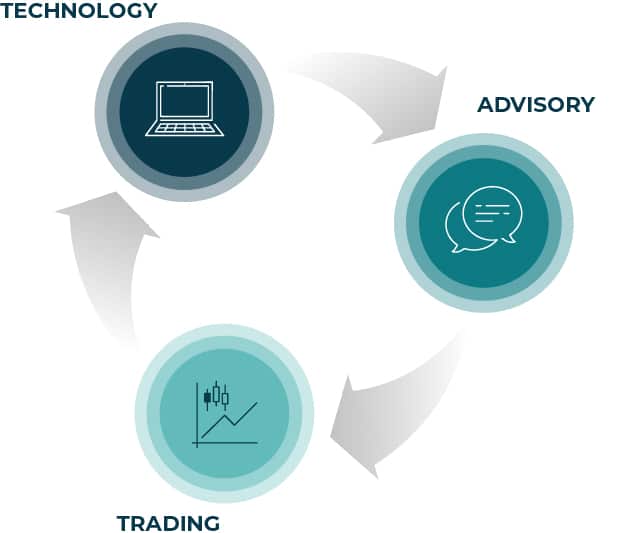 Why EAC management requires technology, advisory, and trading
Many organizations evaluate EAC management through a single lens; either as a software solution or a consulting engagement. In practice, neither delivers the full value on its own.

It centralizes data and delivers continuous visibility across registries, instruments, and geographies—transforming reporting into predictable, frictionless cycles rather than high-risk events.

It translates evolving policy, matching requirements, and market conditions into a comprehensive procurement strategy that stays ahead of compliance risk.
It delivers the market access and execution capability to monetize surplus or cover deficits, enabling swift action as opportunities arise.
Individually, each component is valuable. Together, they become transformative.
Is your organization a good fit for EAC management?
You are likely leaving money on the table if:

You manage a complex renewable energy portfolio spanning multiple procurement channels, geographies, or certificate types.
You anticipate periods of over- or under-subscription due to load variability or long-term procurement strategies.
You currently manage — or expect to manage — a large volume of EACs due to significant electricity load or expected growth.
You face growing complexity in sourcing renewable energy and need strategic guidance to manage surplus and deficit scenarios.
Your sustainability team is spending more time on certificate administration than on strategy and stakeholder engagement.
You’ve experienced (or suspect) billing errors, missed monetization opportunities, or compliance gaps in your current process.
EAC portfolio management as a strategic advantage
Renewable energy remains one of the most accessible, cost-effective, and impactful tools for achieving GHG reduction targets. With the right partner, organizations gain:
- Full visibility into their global portfolio
- Integrated technology, advisory, and trading capabilities
- Continuous optimization of financial and operational performance
- Confidence in audit readiness and compliance alignment
Ready to unlock the full financial and strategic value of your EAC portfolio?
We can help. Connect with our experienced advisors to ensure your global renewable energy portfolio is fully optimized, audit-ready, and strategically positioned to meet your most ambitious corporate climate goals.