Is your RE strategy costing you more than it should?
How to build a procurement strategy that pays for itself
3Degrees Meridian
Turn EAC management complexity into portfolio value with 3Degrees Meridian.

The CFO is in the room now
Picture this: your sustainability team has spent months building the case for a long-term renewable energy offtake agreement. The numbers are solid and the decarbonization rationale is clear. Then the CFO walks in, takes one look at the projected spend, and asks: “Is this the best use of resources right now?”
It’s a fair question to pose. And corporations, especially those in industrial sectors like chemicals, infrastructure materials, and advanced manufacturing, are increasingly finding themselves at this intersection: real pressure to decarbonize and internal resistance to anything that doesn’t look cost-neutral.
The assumption baked into the CFO’s question is worth examining. It treats renewable energy strategy as a cost, something to be weighed against core OpEx and deferred when budgets tighten. That framing can cause companies to overlook financially attractive pathways that reduce cost exposure while advancing sustainability goals.
The green premium is real. So is the cost of ignoring the pathways that lower it.
Climate action is a financial strategy
Let’s reframe. The question isn’t whether your organization can afford a renewable energy strategy. It’s whether you can afford to keep treating clean energy procurement as a cost center without accounting for market volatility, sourcing models, and policy incentives that can change the economics.

Fossil fuel prices are volatile by nature, and that volatility flows directly into operating costs and margin. Physical power purchase agreements (PPAs) may provide long-term price visibility for delivered power, while virtual PPAs (VPPAs) typically involve fixed-for-floating structures with cash flows that move with market prices. Either structure requires careful market assessment, but both can help companies connect renewable energy procurement to long-term budget planning and risk management.

For organizations already using energy attribute certificates (EACs) to support scope 2 goals, active EAC portfolio management can also create measurable cost benefits by reducing administrative burden, catching billing errors or delivery discrepancies, and identifying surplus certificates that can be monetized instead of left idle. It also helps maintain audit readiness as reporting expectations become more rigorous. Advisory support, such as expert EAC portfolio management, is often a small share of the overall cost of a renewable energy strategy, but it can have an outsized impact on the outcome. The right advisor can help companies avoid costly missteps, identify better-fit procurement options, and structure decisions to capture more financial value.
In the United States, companies can pair renewable procurement with the purchase of transferable production or investment tax credits generated by clean energy projects, including credits like 45Y and 48E. When purchased at a discount to face value, these credits reduce federal tax liability and create tax savings that may be redirected into broader decarbonization plans.

In Europe, biomethane guarantees of origin (GOs) meet regulatory and customer requirements while directly reducing a product’s carbon footprint (PCF). In industrial supply chains increasingly subject to EU carbon border rules, a lower PCF isn’t just a sustainability achievement but a risk mitigation strategy.
Biomethane procurement deserves particular attention for industries with high scope 1 emissions. Replacing fossil natural gas with certified biomethane reduces direct emissions and improves PCF at the product level. This can have several benefits, including helping customers achieve their climate targets and reducing the compliance burden of the Carbon Border Adjustment Mechanism (CBAM) or EU Emission Trading System (ETS).
For example, a mid-sized chemical manufacturer procuring a portion of its natural gas demand from certified biomethane, paired with electricity GOs covering its power load, could reduce its product-level carbon intensity and strengthen its position with major European buyers—while using a procurement structure designed to stay cost comparable to or below a fully fossil baseline.
Smarter renewable energy procurement can reduce exposure to volatility and unlock financial value. The question is whether your strategy is structured to capture that.
Unlocking capital: transferable tax credits change the math

One of the newer and most significant levers available to corporate buyers in the U.S. is the transferable tax credit (TTC) mechanism created under the Inflation Reduction Act (IRA). A wide range of clean energy and industrial credits are now transferable: 45Q (carbon capture), 45V (clean hydrogen), 45Z (clean fuels), and 48C (advanced manufacturing), along with 45Y/48E (clean electricity). As a corporate entity, purchasing these tax credits is a financially attractive way to support renewable energy development and direct some of the financial savings back into your procurement or broader decarbonization program.
For industrial companies investing in decarbonization infrastructure, transferability allows the purchase of TTCs at a discount to face value (typically $0.90-$0.95 on the dollar), effectively reducing federal tax liability. The result: a portion of your existing tax spend can be redirected into climate action plans. The transferable tax credit market now represents more than $40B in annual transactions. Industrial companies with meaningful tax liability (we advise $10M at minimum) are well positioned to take advantage of this market.
For example, a steel manufacturer with $150M in annual federal tax liability purchases $50M in transferable 48E credits at $0.90 on the dollar, reducing its tax bill by $50M at a cost of $45M — a $5M savings that can be reinvested into other decarbonization initiatives.
Reduce your tax burden while supporting the build-out of renewables. Pair TTC procurement with RECs or PPAs to couple the financial benefit with the ability to make scope 2 claims.
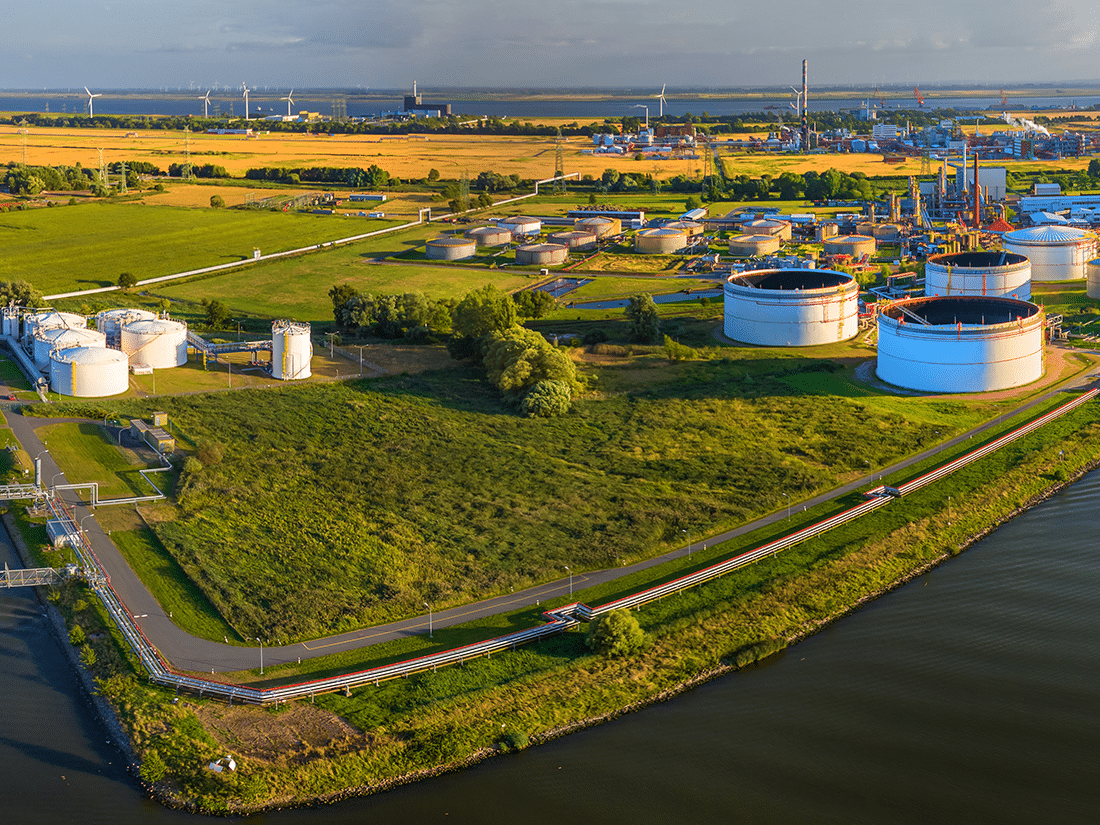
The EU ETS imposes a direct carbon cost on covered operations, and carbon prices have ranged from €60 to over €100 per tonne in recent years. CBAM extends this logic to imports: beginning in 2026, EU importers of cement, steel, aluminum, fertilizers, chemicals, and hydrogen must account for the embedded carbon content of these goods and pay a carbon price based on the EU ETS.
U.S. manufacturers with European customers may not be directly obligated under CBAM, but their EU importers are. If embedded carbon increases an importer’s CBAM-related costs, buyers may seek lower-carbon suppliers, request better product-level emissions data, or use carbon intensity as a pricing and procurement factor.
The comparison that finance teams need to run is direct:
What is the levelized cost of reducing carbon intensity (CI) through renewable energy procurement, RNG substitution, or process modification versus the cost of CBAM compliance at current and projected carbon prices? In many scenarios, early emissions-reduction investments are cost-neutral or favorable over a five-to-seven-year horizon.
Not only does the EU regulate, it also incentivizes. Initiatives like the Innovation Fund, Contracts for Difference for low-carbon technologies, and national state aid programs provide meaningful capital offsets for industrial decarbonization investment. The companies capturing these incentives are not the most climate-committed; they are the most strategically prepared.
Compliance isn’t just a cost. For companies that plan ahead, it’s a source of competitive advantage and a way to avoid financial penalties.
As downstream customers add emissions requirements to supplier scorecards and procurement contracts, industrial producers that can document lower-carbon inputs and reduced product PCF may be better positioned to defend margins and maintain preferred supplier status. Internal carbon pricing can help finance teams evaluate this opportunity by comparing conventional and low-carbon investments against an assumed future cost of carbon. The goal is not to force every project through a sustainability lens; it is to make customer, regulatory, and cost exposure visible in financial decisions.
Companies that move early can lock in incentives, strengthen supplier relationships, and build cost resilience before regulatory expectations rise further.
Building the finance-ready business case
Most decarbonization initiatives stall not for lack of strategic merit but for lack of a compelling business case that finance teams can act on. The following levers, when integrated into a cohesive strategy, close that gap:

For companies already procuring EACs globally, expert portfolio management can reduce administrative burden, recover billing discrepancies, monetize surplus certificates, and maintain the audit readiness increasingly required by CSRD, CDP, and SBTi.

Assess annual U.S. federal tax liability and identify the optimal volume and type of transferable credits to purchase. Reinvest the tax savings toward decarbonization priorities that need additional budget support.

Apply a shadow carbon price–an internal financial value assigned to emissions–to all capital allocation decisions. This surfaces the true long-term cost advantage of decarbonization investments and aligns sustainability and finance teams on a shared analytical framework.
Together, these mechanisms help companies translate renewable energy and decarbonization work into the language finance teams use–cost exposure, tax liability, risk, and margin protection. Challenges exist, but the financial opportunities are also real, increasingly well-defined, and accessible to companies that engage with them seriously.
Ready to build a smart procurement strategy?
3Degrees works with sustainability and finance leaders at leading companies to design procurement strategies, evaluate TTC and PPA opportunities, and build the business cases that move initiatives from sustainability team to board approval. Connect with our advisors to explore what the right pathway looks like for your operations.